Four years ago, I watched a client miss a 380-yard shot on a trophy mule deer because he didn’t understand his scope’s focal plane. He held for wind using his reticle marks at 8x magnification on his second focal plane scope, not realizing those marks were only accurate at 24x. The bullet sailed two feet left into a juniper tree. That buck is probably still laughing. This is why understanding focal planes isn’t just technical jargon—it’s the difference between meat in the freezer and expensive disappointment.
After thirty years of shooting—from Army Ranger sniper training to guiding hunters through Montana’s backcountry—I’ve seen every way shooters can mess up with their optics. The FFP versus SFP debate generates more confusion than any other scope topic, and most of what you read online is written by people who’ve never missed a shot that mattered.
Let me break this down in terms that actually make sense, based on thousands of hours behind both types of scopes in conditions ranging from Afghanistan’s mountains to Montana’s frozen valleys.
The Five-Minute Education
Before we dive deep, here’s what you actually need to know:
First Focal Plane (FFP):

- Ruggedly built on a 30mm tube, the Viper HD 5-25×50 features a 5x optical design and an illuminated first focal plane reticle. The fast-focus eyepiece easily adjusts the reticle focus and the side parallax knob allows quick and easy adjustments.
The reticle grows and shrinks as you zoom. Your holdover marks stay accurate at any magnification. More expensive, more versatile, sometimes harder to see.
Second Focal Plane (SFP):
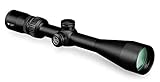
- The single piece 3-9×50 Sonora second focal plane riflescope has a 1-inch, aircraft-grade aluminum tube and offers a versatile blend of adjustment for a wide variety of applications.
The reticle stays the same size regardless of zoom. Holdover marks only work at one magnification (usually max). Cheaper, always visible, requires math or memorization.
That’s it. Everything else is details. But those details matter when you’re lining up the shot of a lifetime.
How These Things Actually Work
First Focal Plane – The Reticle That Grows
Imagine your reticle is painted on a window in front of your magnification lenses. As you zoom in on your target, you’re also zooming in on that painted reticle. Everything scales together.
I’ve got an FFP scope on my long-range .300 Win Mag. At 5x, the reticle looks thin and delicate. At 25x, it’s bold and prominent. But here’s the magic: if my windage marks show 2 MOA at 5x, they still show 2 MOA at 25x. No math, no guessing, just hold and shoot.
During a windstorm elk hunt last September, I spotted a bull at 520 yards. Wind was gusting 15-25 mph. With my FFP scope at 12x (couldn’t go higher due to mirage), I held 3 MOA right using my reticle marks. Center punch. If that had been an SFP scope, I’d have been doing frantic math while that bull wandered off.
Second Focal Plane – The Reticle That Doesn’t
Now imagine that same painted window, but it’s behind your magnification lenses. You zoom in on your target, but the painted reticle stays the same size in your view.
My truck gun wears an SFP scope—a basic 3-9×40. The crosshairs look the same at 3x as they do at 9x. Simple, visible, uncomplicated. For shots inside 300 yards (which is 95% of real-world hunting), it’s perfect.
But here’s the catch: those fancy holdover marks below your crosshair? They’re only accurate at one magnification—usually maximum. On my 3-9x, those marks are calibrated for 9x. At 6x, they’re off by 33%. At 3x, they’re off by 67%. Miss that detail, and you’ll miss your target.
Real-World Performance: Where Theory Meets Reality
Close Range (0-200 yards)
SFP Dominates Here. At close range, you’re typically on low magnification for a wider field of view. An SFP reticle stays bold and visible—crucial when a bull elk suddenly appears at 50 yards in dark timber. Meanwhile, FFP reticles can become whisper-thin at low magnification.
Last November, I had a whitetail buck jump up at 30 yards. Through my backup rifle’s SFP scope at 2x, the duplex reticle was bold and instantly visible against his body. My partner, using an FFP scope at similar magnification, struggled to find his thin reticle lines against the deer’s dark hide. I filled my tag; he went home with a story.
Medium Range (200-500 yards)
It’s a Draw. Both work fine here if you know what you’re doing. This is typical western hunting distance where you have time to adjust magnification properly.
With SFP, I dial to maximum magnification for accurate holdovers. With FFP, I can stay at whatever magnification gives the best image quality and still trust my reticle marks. Neither has a significant advantage if you understand your equipment.
Long Range (500+ yards)
FFP Wins Decisively. When precision matters and conditions are changing, FFP is unmatched. Wind calls, quick follow-up shots, spotting impacts—everything is easier when your reticle subtensions stay consistent.
During a prairie dog shoot last summer, winds were switching constantly. With my FFP scope, I could stay at 15x (best image quality in the mirage) and adjust holds instantly. Guys running SFP scopes were either cranking to max magnification (making mirage unbearable) or doing mental math for every shot. I connected on 73% of my shots; the SFP crowd averaged under 50%.
The Hidden Truths Nobody Mentions
The Magnification Sweet Spot Problem
Every scope has a magnification range where image quality peaks—usually around 60-70% of maximum. On a 5-25x scope, that’s 15-18x. Push to maximum, and you get darker images, more mirage distortion, and smaller exit pupils.
With FFP, you can stay in that sweet spot and still use your reticle accurately. With SFP, you’re forced to maximum magnification for accurate holdovers, even when image quality suffers.
The Illumination Factor
Illuminated reticles change everything. A thin FFP reticle becomes perfectly visible at low magnification when lit up. But here’s the catch: batteries die, usually at the worst moment.
Three years ago, during a dawn elk hunt, my illuminated FFP reticle’s battery died. In the low light, against dark timber, that thin reticle was nearly invisible at 4x. I had to crank to 10x just to see it clearly, making close shots problematic. Now I carry spare batteries religiously.
The Training Investment
SFP scopes teach bad habits. You learn to always zoom to maximum for long shots, even when conditions don’t support it. You avoid using holdovers because the math is complicated. You become a “dialer” exclusively, which is slow.
FFP scopes force you to learn your reticle. You develop the ability to hold for wind and elevation quickly. You become faster and more adaptable. That training investment pays dividends in the field.
The Cost Reality
FFP Pricing Truth
- Entry Level: $500-$800 (Adequate but not impressive)
- Mid-Range: $800-$1,500 (Sweet spot for most shooters)
- Premium: $1,500-$3,500 (Diminishing returns for hunters)
- Alpha Glass: $3,500+ (For professionals and competitors)
SFP Pricing Truth
- Entry Level: $200-$400 (Perfectly functional for most hunting)
- Mid-Range: $400-$800 (Excellent value proposition)
- Premium: $800-$1,500 (Outstanding glass in simple format)
- Alpha Glass: $1,500+ (Rare but exceptional)
The price difference is real. You can get exceptional SFP glass for the price of mediocre FFP. That matters when you’re on a budget.
Who Should Buy What
Buy FFP If:
- You shoot beyond 500 yards regularly
- You compete in precision rifle matches
- You need to engage multiple distances quickly
- You can afford the premium for versatility
- You’re willing to invest time learning your reticle
- You shoot in varying conditions requiring different magnifications
Buy SFP If:
- Most shots are inside 400 yards
- You prefer simple, bold reticles
- Budget is a primary concern
- You mainly hunt in timber or brush
- You’re buying your first quality scope
- You always shoot at the same distances
The Third Option: Fixed Power
Here’s what nobody talks about: fixed power scopes. No focal plane issues, lighter weight, better glass for the money, more reliable. My grandfather killed everything from squirrels to moose with a fixed 4x scope.
For woods hunting inside 300 yards, a quality fixed 4x or 6x scope beats most variables. Something to consider.
My Personal Setup
After decades of experimentation, here’s what I run:
Long-Range Rifle (.300 Win Mag): FFP 5-25×56 – For shots beyond 400 yards where precision matters.
General Hunting Rifle (.270 Win): SFP 3-9×40 – Covers 90% of hunting situations perfectly.
Timber Rifle (.308 Win): Fixed 6×42 – Simple, bombproof, perfect for woods hunting.
Dangerous Game Rifle (.375 H&H): SFP 1-4×24 – Bold reticle visible at 1x for close encounters.
Precision Trainer (.223 Rem): FFP 4-16×44 – Teaches wind reading and reticle use affordably.
Common Mistakes to Avoid
FFP Mistakes:
- Buying too much magnification (you’ll never see your reticle at low power)
- Skipping illumination (you’ll need it eventually)
- Choosing complex reticles (simple is usually better)
- Not practicing at various magnifications
SFP Mistakes:
- Not knowing your subtension magnification
- Using holdovers at wrong magnification
- Buying BDC reticles for multiple rifles/loads
- Assuming “maximum magnification” means “best image”
The Bottom Line Truth
After thirty years of missing and hitting shots that mattered, here’s my truth:
For 90% of hunters, a quality SFP scope is all you’ll ever need. It’s simpler, cheaper, and the reticle is always visible. Learn to dial your turrets for distance, and you’ll kill everything you aim at inside 500 yards.
For long-range shooters, competitors, and those who shoot in rapidly changing conditions, FFP is worth the investment. The versatility and speed advantages are real.
But here’s the real secret: The focal plane matters far less than the quality of glass and the skill of the shooter. I’ve seen guys with $3,000 FFP scopes miss easy shots, and guys with $300 SFP scopes make impossible ones.
Buy the best glass you can afford in whatever focal plane makes sense for your use. Then practice until you know that scope better than your truck’s dashboard. Because when that trophy steps out, understanding your equipment is what makes the difference.
Remember: Scopes don’t kill animals. Shooters who understand their scopes kill animals.
Practice makes permanent, so practice it right.
Glass clearly,
Flint Marshall
Northern Montana
Questions about choosing the right focal plane for your hunting? Want to argue about FFP vs. SFP? Drop a comment below or check out more no-BS optics wisdom at Moosir.com. Remember—respect the equipment, respect the animal, respect yourself.