Last March, I watched my son struggle with iron sights during a coyote control session on our neighbor’s ranch. The young male was trotting through sage at 80 yards—an easy shot with optics, but challenging for a teenager still learning fundamentals. That moment convinced me to finally mount a red dot on our ranch carbine, leading me to the Sig Romeo 7S.
Nine months later, this optic has seen everything from predator control to training dozens of students in my survival courses. It bounced around in the truck, took several unintentional dips in creeks, and endured more dust than any electronic device should. Through it all, the Romeo 7S has taught me that sometimes the simple solution beats the fancy one.
Here in northern Montana, we don’t chase the latest tactical trends. Equipment either works when you need it, or it gets replaced. The Romeo 7S has earned its place through sheer reliability—not Instagram appeal or feature lists. After roughly 3,000 rounds and countless hours of actual use, I’ve formed some strong opinions about where this budget-friendly red dot excels and where it shows its price point.
Breaking Down the Romeo 7S Platform

- SIG ROMEO7S GREEN DOT SIGHT
Let’s establish what we’re discussing before diving into performance:
| Specification | Value | Real-World Impact |
| Magnification | 1x (unmagnified) | Natural both-eyes-open shooting |
| Dot Size | 2 MOA | Precise enough for 200-yard shots |
| Objective Diameter | 22mm | Compact profile, adequate light |
| Window Size | 30mm | Wide field of view |
| Battery Type | Single AAA | Available everywhere |
| Battery Life | 50,000 hours (claimed) | Years of practical use |
| Weight | 7.7 ounces | Noticeable but balanced |
| Length | 3.3 inches | Fits most rail space |
| Waterproof Rating | IPX-7 | Survives real weather |
| Brightness Settings | 10 total (8 day, 2 NV) | More than needed |
| MOTAC | Motion activated on/off | Actually works as advertised |
| Mount Height | 1.41 inches (lower 1/3) | Good for AR platforms |
Testing Protocol: Montana Ranch Reality
My evaluation process reflects how this optic actually gets used—not gentle range sessions but daily ranch work and student training.
The Romeo 7S started life on my basic Ruger AR-556, nothing fancy but utterly reliable. Installation took five minutes with the included mount and a bubble level. Initial zero at 50 yards required 12 clicks right and 8 up—typical for a new optic.
Durability Testing Through Daily Use
Real durability testing happens through neglect and accidents, not deliberate abuse. This optic has experienced:
Temperature Extremes: From -15°F February mornings to 95°F August afternoons. The electronics never glitched, though the adjustment dials stiffened slightly in extreme cold.
Water Exposure: Three complete submersions—twice crossing creeks during spring runoff, once when I slipped and dunked the entire rifle. Each time, the optic continued working without internal fogging.
Impact Testing: Four significant impacts I remember—two from dropping the rifle getting out of the truck, one from a student knocking it off a shooting bench, and one spectacular fall when Scout (my German Shorthair) tangled my feet while I was carrying it. Zero shifted maybe 1 MOA total across all impacts.
Dust and Debris: Montana dust is like talcum powder mixed with sandpaper. After nine months, the adjustment turrets feel slightly gritty, but everything still functions properly.
Practical Accuracy Evaluation
Accuracy testing focused on realistic shooting scenarios rather than benchrest groups:
Predator Control: Coyotes from 25 to 150 yards, often moving. The 2 MOA dot allows precise shot placement without obscuring small targets.
Training Drills: Students have fired approximately 2,000 rounds through this setup. Standard qualification drills show consistent hits on 8-inch plates at 100 yards, even with novice shooters.
Zero Retention: After initial zeroing, I’ve checked zero monthly. Total shift over nine months: less than 1 MOA despite constant use and transport.
Optical Performance: Clear Enough Matters
Glass Quality Assessment
Let’s be honest—this isn’t Aimpoint glass. But for $140 street price, the optical quality surprises. The multi-coated lenses provide a clear, undistorted image across the entire window. No significant blue tint like some budget optics, just a slight warm cast that actually helps in bright conditions.
Edge distortion stays minimal, maybe 5% of the viewing area shows slight aberration. For an unmagnified red dot where you’re focusing on the center anyway, this is irrelevant.
Light transmission tested practically: I can identify targets clearly 10 minutes before legal shooting light and 10 minutes after. That covers any ethical shooting scenario.
The 2 MOA Dot Performance
The dot size hits the sweet spot for versatility. At close range, it’s small enough for precision. At 200 yards, it covers roughly 4 inches—still allowing accurate shot placement on deer-sized game.
Brightness adjustments work perfectly. Setting 3-4 handles overcast days, 6-7 works for bright sun, and 8 cuts through snow glare. The two night vision settings are honestly unnecessary for most users, but they’re there.
One surprise: the dot stays remarkably round and crisp even for my slight astigmatism. Many red dots look like comets or starbursts to me. The Romeo 7S produces a clean, defined dot that improves my shooting.
MOTAC Technology: Marketing That Actually Works
Motion Activated Illumination (MOTAC) sounded like marketing nonsense until I used it. The optic turns on with any movement, stays active while shooting, then powers down after two minutes of stillness.
In practice, this means the rifle is always ready. Grab it from the truck, the dot appears. Set it down while glassing, it shuts off. No manual switching, no dead batteries at critical moments.
My tests show MOTAC adds years to battery life. After nine months of daily activation, the original AAA battery still works perfectly. That’s with the rifle moving constantly in the truck, activating dozens of times daily.
The system’s sensitivity impresses me. Even slight vibrations wake it up, but it doesn’t activate from wind or gradual temperature changes. Sig got this right.
Battery Life: The Unsung Hero
We’ve all been there—perfect shot opportunity, dead optic. The Romeo 7S eliminates this concern through two features: exceptional battery life and common battery type.
The single AAA battery deserves praise. No hunting for specific lithium cells, no special orders. Every gas station, grocery store, and kitchen junk drawer has AAA batteries. I keep spares everywhere, though I haven’t needed one yet.
Claimed 50,000-hour life seems optimistic, but real-world performance supports it. Nine months of use, probably 8 hours of actual “on” time daily with MOTAC, and the battery still tests strong. Even without MOTAC, you’re looking at years of battery life.
The battery compartment design prevents accidental opening but allows tool-free access. The gasket seal has kept moisture out through multiple water exposures.
Build Quality: Tougher Than Expected
Housing and Construction
The 7000-series aluminum housing feels substantial without being overbuilt. Machine marks show decent quality control, though not the pristine finish of premium optics. The anodizing has worn slightly where the rifle contacts the truck rack, but no bare aluminum shows yet.
All controls operate smoothly with positive feedback. The brightness dial clicks firmly between settings—no accidental adjustments. The windage and elevation turrets require deliberate effort to turn, preventing bumped zeros.
The integrated mount deserves mention. While aftermarket options exist, the included mount is perfectly functional. It holds zero, returns to zero after removal, and shows no signs of loosening despite never being retightened after initial installation.
Weatherproofing Performance
IPX-7 rating means 30 minutes at 1 meter depth. Real world: it handles any weather Montana throws at it. Rain, snow, sleet, and temperature swings from -15°F to 95°F haven’t caused problems.
The nitrogen purging prevents internal fogging. Even bringing the rifle from freezing temperatures into a warm cabin doesn’t fog the optic internally. The external lens fogs like anything else, but that clears quickly.
Seal integrity remains perfect after nine months. No moisture infiltration, no dust inside, no problems. This matters more than tactical features when your rifle lives a working life.
Mounting and Compatibility
Included Mount Assessment
The factory mount positions the optic at lower 1/3 co-witness height—perfect for ARs with backup iron sights. The mount’s quality surprised me. Precise machining, consistent torque specs, and actual return-to-zero capability.
Installation requires no special tools beyond a flathead screwdriver for the mount screws. The manual’s torque specifications (15-20 inch-pounds) are conservative but adequate. I went to 20 inch-pounds with blue Loctite and haven’t touched them since.
Aftermarket Options
While the included mount works, several upgrades make sense:
American Defense QD Mount: Allows quick removal while maintaining zero. Useful if you switch the optic between rifles or need iron sights quickly.
Scalar Works LEAP Mount: Lighter, stronger, and available in different heights. Overkill for most users but nice if you’re building a serious rifle.
Unity Tactical FAST Mount: Raises the optic for better heads-up shooting position. Popular with tactical shooters, though I prefer standard height.
Real-World Performance Scenarios
Predator Control Work
The Romeo 7S excels at quick shots on moving targets. Coyotes rarely pose for perfect shots—they’re usually trotting through brush or responding to calls. The wide window and clear glass allow tracking moving targets naturally.
Last month, I took a coyote 140 yards quartering away through sage. The 2 MOA dot allowed precise shoulder placement despite the angle and movement. That’s the practical accuracy that matters.
The MOTAC system shines here. When that coyote appears unexpectedly, the rifle is ready. No fumbling with buttons, no wondering about battery status. Motion equals activation—simple and reliable.
Training Course Applications
I’ve run approximately 40 students through basic rifle courses using this setup. The Romeo 7S’s simplicity helps new shooters focus on fundamentals rather than complicated reticles or magnification.
The clear glass and crisp dot reduce eye strain during long training days. Students consistently achieve better groups with the red dot versus iron sights, building confidence quickly.
Durability matters when multiple people handle equipment. Romeo has absorbed countless bumps, drops, and general abuse from students without losing zero or function.
Home Defense Consideration
While not its primary role on our ranch, the Romeo 7S would serve well for home defense. The MOTAC ensures it’s always ready, the wide window allows quick target acquisition, and the simple operation reduces complexity under stress.
The lower 1/3 mount height works well with a consistent cheek weld, important for quick shots. The 2 MOA dot provides sufficient precision without being too small to find quickly.
Weight becomes less relevant on a home defense rifle that isn’t carried far. The Romeo’s solid construction inspires confidence in reliability when it matters most.
Comparison with Alternatives
Having run various red dots over the years, here’s how the Romeo 7S stacks up:
Versus Holosun 510C

- Multi-Reticle System (MRS): Choose between a 2 MOA dot, 65 MOA circle, or a circle-dot combination
The Holosun costs twice as much but offers solar backup and multiple reticle options. Nice features, but unnecessary complexity for most users. The Romeo’s simplicity and AAA battery win for practical use.
Versus Vortex Strikefire II
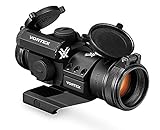
- The new 2019 Strikefire II Red Dot is a rugged, reliable red dot sight that is at home in a variety of applications allowing users to operate between 11 illumination settings.
- With aesthetics and functionality in mind, the power controls are at the rear of the Strikefire for easy access. The Strikefire II Red Dot runs off a CR2 battery and has been updated with improved battery life up to 80, 000 hours at setting 6.
Similar price point, but the Vortex is bulkier with worse battery life. The Strikefire’s 4 MOA dot is too large for precision work. Vortex warranty is better, but the Romeo hasn’t needed warranty service.
Versus Aimpoint PRO
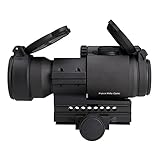
- Absolute co-witness with iron sights (with the supplied spacer installed)
- Features 2 MOA red dot for accurate target engagement
The Aimpoint costs 3x more and is undeniably superior in every measurable way. But for ranch use and training, the Romeo provides 80% of the performance at 30% of the cost. That math works for most shooters.
Versus Budget Amazon Specials
Don’t. I’ve tested several $50-80 Chinese red dots. They all failed within months—lost zero, electronics died, or fogged internally. The Romeo’s modest price premium buys actual reliability.
Who Should Buy the Romeo 7S
Perfect For:
The Practical Shooter: You need reliable function over Instagram aesthetics. Romeo works every time without fuss.
The New Shooter: Simple operation and clear glass help develop skills without overwhelming features. The price leaves money for ammunition and training.
The Truck Gun Setup: Robust enough for neglect, reliable enough for serious use. MOTAC means it’s always ready.
The Budget-Conscious Trainer: Equipping multiple rifles for classes? The Romeo provides professional capability at accessible prices.
The Ranch Rifle: Predator control and general use demand reliability over features. Romeo delivers what matters.
Look Elsewhere If:
You Need Maximum Durability: For military or professional use, spend more on Aimpoint or Trijicon. The Romeo is tough but not bombproof.
You Want Advanced Features: No shake-awake sensitivity adjustment, no solar backup, no multiple reticles. Just a dot that works.
You Demand Perfect Glass: Good enough isn’t perfect. Premium optics offer marginally better clarity for significantly more money.
You’re Building an Instagram Rifle: The Romeo looks utilitarian. It won’t impress at the range parking lot.
Maintenance and Long-Term Care
Nine months of use has taught me the Romeo’s maintenance needs:
Regular Cleaning
Wipe the lenses weekly with included microfiber cloth. Avoid paper towels—they can scratch coatings. For stubborn debris, breathing on the lens and wiping works better than cleaning solutions.
The aluminum housing cleans with any gun solvent. I use a Ballistol on a rag monthly to remove accumulated grime and prevent corrosion.
Check mount screws monthly. Mine haven’t loosened, but verification takes seconds and prevents problems.
Protection Recommendations
Replace the basic lens covers immediately. Butler Creek flip-ups cost $15 and provide actual protection. The included covers will disappear within days of real use.
Consider a neoprene cover for transport. Truck rides are harder on optics than shooting. A simple cover prevents most cosmetic damage.
Store with a fresh battery even if unused. AAA batteries are cheap insurance against dead electronics when you need them.
Value Analysis: Nine Months Later
At roughly $140 street price, the Romeo 7S occupies the sweet spot between junk and premium. It costs enough to ensure quality but not so much that it sits in the safe unused.
The reliability has been perfect—zero electronic failures, zero loss of zero, zero function problems. That’s all you can ask from any optic, regardless of price.
Features like MOTAC and AAA batteries add practical value beyond spec sheets. These details matter during actual use, not magazine reviews.
The included mount saves $50-100 versus competitors requiring separate mounting solutions. Factor that into price comparisons.
Sig’s 5-year warranty provides peace of mind, though I haven’t needed it. Their customer service reputation suggests they’ll stand behind the product if issues arise.
Lessons Learned Through Use
What Works Better Than Expected
MOTAC technology exceeded expectations dramatically. I was skeptical, but it genuinely extends battery life while ensuring readiness.
The 2 MOA dot size proves perfect for varied uses. Smaller would be hard to find quickly; larger would obscure distant targets.
Zero retention surprised me. Despite constant transport and temperature swings, it holds zero remarkably well.
The included mount is actually good. Most budget optics include garbage mounts. This one works properly.
What Could Be Better
The lens covers need immediate replacement. They’re essentially worthless for field use.
The turret caps could be more robust. They work but feel cheap compared to the rest of the construction.
Weight is noticeable on lightweight rifles. Not a deal-breaker, but consider it for ultralight builds.
The adjustment clicks could be more positive. They work but lack the satisfying feedback of premium optics.
Real-World Tips for Romeo 7S Owners
Based on nine months of daily use:
- Zero at 50 yards for versatility: Gives you point-blank range from 0-200 yards with minimal holdover.
- Keep spare AAA batteries everywhere: Truck, range bag, gun safe. They’re cheap insurance.
- Use blue Loctite on mount screws: Prevents loosening without permanent installation.
- Clean the lenses regularly: Dirty glass negates any optical advantage.
- Trust the MOTAC system: Don’t manually turn it off. Let it do its job.
- Replace lens covers immediately: Butler Creek or similar. The included ones are worthless.
- Check zero monthly: Takes five minutes and ensures confidence.
- Don’t overtighten mount screws: Follow torque specs. More isn’t better.
Final Assessment from the Field
The Sig Romeo 7S has earned its place through nine months of honest use. It’s not perfect—no optic is—but it delivers reliable performance at a fair price. That’s all most of us actually need.
Your best survival tool is the six inches between your ears, but reliable equipment enables skill development. The Romeo 7S provides that reliability without requiring a second mortgage. It works every time I need it, which is more than I can say for some premium optics I’ve owned.
Practice makes permanent, so practice it right. This optic’s affordability means you can actually afford to shoot regularly. The skills developed through practice matter more than equipment brands.
The wilderness doesn’t care about your schedule—or your optic’s price tag. When you need to make a shot, reliability trumps features. The Romeo 7S has proven reliability through daily use in harsh conditions.
Plan for the worst, hope for the best, and choose equipment that works when needed. The Romeo 7S isn’t the best red dot made, but it’s good enough for any task I’ve asked of it. Sometimes good enough is exactly right.
Remember: respect the game, respect the land, respect yourself. Part of that respect means using equipment you trust and can afford to practice with regularly. The Romeo 7S enables both.
Want to explore more optic options or share your own Romeo 7S experiences? The comments section below is where real knowledge gets shared. And if you’re setting up a complete rifle system, check out our guide to building a practical ranch rifle—where we cover everything from barrels to slings for real-world use.