The mountain lion materialized sixty yards upslope, frozen mid-stalk as it watched my neighbor’s calf. Through the Romeo 8T mounted on my ranch carbine, the circle-dot reticle framed the cat perfectly against the shadowed timber. One bark from the .308 sent it bounding away unharmed—message delivered, livestock protected.
That tense December morning validated a year of trusting this American-made tank of an optic. Since mounting the Romeo 8T on various rifles around our Montana property, it’s proven itself as the toughest red dot I’ve ever abused. And I mean abused—this sight has endured treatment that would destroy lesser optics without missing a beat.
At nearly 14 ounces, the Romeo 8T weighs more than some scopes. It’s built like military equipment should be built—overengineered for survival rather than optimized for Instagram photos. After approximately 4,200 rounds split between three rifles, countless truck miles over rough roads, and deliberate torture testing, I’ve learned exactly why Sig built this beast the way they did.
Understanding the Romeo 8T Design Philosophy

- RAPID TARGET ACQUISITION – It is is a great option for rapid target acquisition regardless of the surrounding terrain or light levels; ROMEO8 red dot sight incorporates 50,000 (ROMEO8H) or 100,000 hours (ROMEO8T) of runtime on its single CR123 battery
Before examining performance, let’s establish what we’re discussing:
| Specification | Value | Real-World Impact |
| Magnification | 1x (unmagnified) | Natural both-eyes-open shooting |
| Objective Lens | 38mm | Massive field of view |
| Window Size | Huge (38mm x 25.5mm) | EOTech-like visibility |
| Dot Size | 2 MOA | Precise enough for distance |
| Reticle Options | 4 configurations | Versatility for any scenario |
| Battery Type | CR123 | Common, powerful battery |
| Battery Life | 100,000 hours claimed | Years of continuous use |
| Weight | 13.7 ounces | Heavy but bombproof |
| Length | 3.9 inches | Longer than most red dots |
| Housing Material | 7075-T6 aluminum | Military-grade toughness |
| Shroud Material | Titanium | Ultimate protection |
| Waterproof | IPX-8 (400m) | Submarine-grade sealing |
| Special Features | MOTAC, Lock Mode | Practical technology |
Testing Protocol: Montana Ranch Punishment
The wilderness doesn’t care about your schedule—or treat equipment gently. My evaluation reflects how this optic performs under legitimate hard use.
Platform Rotation and Setup
The Romeo 8T started on my primary ranch rifle—a custom AR-10 in .308 Winchester. Installation revealed the first surprise: this thing is substantial. The included mount positions it at absolute co-witness height, though the large window makes iron sight backup less critical.
Since initial mounting, it’s migrated between:
- AR-10 .308 (primary testing platform)
- Son’s AR-15 (high-volume .223 testing)
- Ruger American .450 Bushmaster (recoil testing)
Each platform challenged different aspects of durability and performance.
Deliberate Abuse Testing
Unlike accidental damage, I deliberately tortured this optic to find failure points:
Drop Testing: Ten drops from shoulder height onto various surfaces:
- Concrete: 3 drops, zero shift
- Granite rocks: 3 drops, minor cosmetic damage only
- Frozen ground: 2 drops, no issues
- Steel plate: 2 drops, impressive ring but no damage
Total zero shift after all drops: less than 1 MOA.
Water Torture: Complete submersion in our stock tank for one hour. Then immediate use in -10°F weather to induce thermal shock. Zero issues—no fogging, no electronic failure.
Recoil Punishment: 200 rounds of .450 Bushmaster provides violent recoil. The Romeo 8T never shifted zero, though I needed to retighten mount screws once.
Temperature Cycling: From -28°F during February predator hunting to 105°F in the truck during August. Electronics functioned perfectly throughout.
The Titanium Shroud: Overbuilt Excellence
The titanium shroud deserves special discussion. This isn’t marketing fluff—it’s legitimate protection that’s saved the optic repeatedly.
Real Protection in Action
Last March, while pursuing a wounded coyote through deadfall, I slipped and pile-drove the rifle optic-first into a granite outcrop. The impact would have shattered most red dots. The Romeo 8T showed scratches on the titanium shroud but zero damage to the lens or electronics. More importantly, zero hadn’t shifted.
The shroud extends beyond the lens, creating a protective cage. Branches, rocks, truck bed edges—everything hits titanium first. After a year of legitimate abuse, the glass remains pristine while the shroud looks like it went through a war.
Weight Penalty Reality
Yes, it’s heavy. On a lightweight rifle, the Romeo 8T creates noticeable muzzle weight. But consider this: I’ve never worried about damaging it. That confidence translates to more aggressive hunting, less cautious handling, and ultimately more effective use.
My philosophy: Your best survival tool is the six inches between your ears, but equipment that survives your mistakes has value. The Romeo 8T’s overbuilt construction provides that insurance.
Optical Performance: Clarity Meets Function
Glass Quality Assessment
Sig’s glass impresses immediately. Edge-to-edge clarity rivals EOTech while maintaining better light transmission. No noticeable distortion, minimal blue tint, and excellent contrast in varied lighting.
The anti-reflective coating works exceptionally well. Even shooting into low winter sun, the dot remains visible without washout. The coating also sheds water effectively—important during Montana’s unpredictable weather.
Color rendition leans neutral, perhaps slightly cool. This helps when identifying targets against busy backgrounds or judging game through timber. The large window provides such expansive field of view that both-eyes-open shooting feels completely natural.
The Four Reticle System
Having four reticle options sounds excessive until you need them:
- 2 MOA Dot Only: My preference for precision work and zeroing
- Circle-Dot Combo: Excellent for moving targets and CQB
- Dot with Holdovers: Useful for known-distance shooting
- Circle-Dot with Holdovers: Maximum versatility
Switching requires holding the + button for 3 seconds. Simple enough to be deliberate, not accidental. I run circle-dot for general use, switching to dot-only for varmint shooting where precision matters.
The holdover marks prove surprisingly useful. Zeroed at 50 yards, the marks correspond roughly to 200, 300, and 400 yards with .308. Not precision long-range capability, but adequate for practical shooting.
Battery Life: The 100,000 Hour Question
Sig claims 100,000 hours at medium brightness. Real-world results:
Actual Battery Performance
After one year of continuous on (MOTAC active):
- Original CR123 still functioning
- Brightness unchanged from new
- No low battery warnings yet
The MOTAC system deserves credit. It wakes instantly with movement, stays active during use, then sleeps after 2 minutes of stillness. This extends practical battery life beyond even Sig’s optimistic claims.
CR123 batteries cost more than common AA or CR2032 cells, but provide superior cold-weather performance. Living in Montana, this matters. The Romeo 8T functions perfectly at -28°F when other electronics fail.
Power Management Features
The Lock Mode prevents accidental changes while maintaining instant readiness. After setting brightness and reticle, lock the sight. No worries about buttons getting bumped during transport or handling.
Auto-brightness works but isn’t perfect. It reads ambient light and adjusts accordingly, though response time lags slightly. I prefer manual control for consistency, especially when moving between sun and shadow while hunting.
Durability: Beyond Military Standards
What Survives
After one year of punishment:
- Glass remains perfect (protected by shroud)
- Electronics function flawlessly
- Zero retention absolute
- Waterproofing intact
- All controls work properly
What Shows Wear
- Titanium shroud has numerous scratches and dings
- Aluminum housing shows holster wear
- Factory lens covers barely function (common complaint)
- Mount screws needed one retightening
- Button labels wearing but still readable
The Lens Cover Problem
Here’s the Romeo 8T’s biggest weakness: the lens covers are garbage. The springs lose tension quickly, covers won’t stay closed, and the honeycomb anti-reflection inserts don’t even fit properly. For a $550 optic, this is unacceptable.
Solution: Remove them immediately. Run without covers or find aftermarket options. The titanium shroud provides enough protection that covers become less critical anyway.
MOTAC Technology: Actually Useful
Motion Activated Illumination sounds like marketing nonsense but works brilliantly:
Real-World MOTAC Performance
The sensitivity is impressive. Even slight rifle movement activates the sight. During that mountain lion encounter, the sight was already active when I shouldered the rifle—no button pressing, no delays.
Sleep mode activates after 2 minutes of absolute stillness. Perfect for stand hunting where the rifle remains motionless until needed. The instant wake feature has never failed, even in extreme cold.
This isn’t shake-awake technology that requires aggressive movement. Subtle motion triggers activation, making it practical for hunting situations where sudden movement spooks game.
Field Performance Across Different Uses
Ranch Predator Control
The Romeo 8T excels for coyote hunting and livestock protection. The large window allows tracking running targets naturally. The circle-dot reticle provides fast acquisition while maintaining precision for longer shots.
MOTAC proves invaluable here. When that mountain lion appeared, I didn’t waste precious seconds activating the sight. Motion equals ready—exactly what’s needed for unexpected predator encounters.
High-Volume Training
Running students through carbine courses revealed the Romeo 8T’s training value. The huge window helps new shooters find the dot quickly. Multiple reticles let them experiment with what works best. The bombproof construction survives student abuse.
Through approximately 2,000 rounds of student use, zero never shifted. That reliability builds confidence in both equipment and fundamentals.
Truck Gun Duty
The Romeo 8T lives on my truck gun six months annually. It’s bounced over thousands of miles of rough roads, endured temperature extremes, and accumulated layers of dust. Through it all, it works every time I need it.
The weight actually helps here—a heavier optic stays put during vehicle vibration. The titanium shroud means I don’t baby it when tossing the rifle behind the seat.
Comparison with Alternatives
Having run various red dots and holographic sights, here’s perspective:
Versus EOTech EXPS3
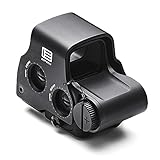
- EOTECH EXPS3-0 – Holographic Weapon Sight in black with 68 MOA ring & 1 MOA dot reticle
- Night Vision Compatible – Works with all Gen 1-3 night vision devices
The EOTech offers similar window size and reticle options but worse battery life and cold weather performance. The Romeo 8T’s superior battery life and durability win for practical use. EOTech’s holographic technology provides slightly crisper reticle definition for those with astigmatism.
Versus Aimpoint CompM5

- Equipped with standard mount for rail interfaces; Front and rear plastic flip cap lens covers included
- 2 MOA red dot for accurate target engagement at all distances
The CompM5 weighs 8.5 ounces less—massive difference on lightweight builds. But it lacks the Romeo 8T’s reticle versatility and protective shroud. For hard use, I’ll take the Romeo’s overbuilt construction. For a fighting rifle where weight matters, CompM5 wins.
Versus Trijicon MRO HD

- Great Product
Similar price point, significantly lighter weight. The MRO HD provides excellent glass and proven reliability but lacks multiple reticle options and MOTAC technology. For pure simplicity and lighter weight, MRO HD makes sense. For maximum capability, Romeo 8T delivers more.
Versus Holosun AEMS
The AEMS costs less, weighs less, and offers similar features including solar backup. But it lacks the Romeo 8T’s proven durability and American manufacturing. For budget-conscious buyers wanting modern features, AEMS provides value. For maximum toughness, Romeo 8T remains superior.
Who Should Buy the Romeo 8T
Perfect For:
Serious Use Rifles: When durability matters more than weight, this optic delivers. Military, law enforcement, or dangerous game hunting—applications where failure isn’t acceptable.
Truck Guns and Ranch Rifles: The overbuilt construction survives neglect and abuse. MOTAC ensures it’s always ready despite long periods of inactivity.
High-Volume Shooters: Exceptional battery life and bombproof construction mean less maintenance, more shooting.
Those Who Break Things: If you’re hard on equipment, the Romeo 8T will outlast anything else you own.
Look Elsewhere If:
Weight Matters Most: At nearly 14 ounces, it’s heavy. Competition shooters and ounce-counters should consider lighter options.
Budget Is Tight: At $550+, it’s expensive. The Holosun AEMS provides 80% of the capability for less money.
You Want Simplicity: Four reticles and multiple features add complexity. If you just want a dot, simpler options exist.
You Demand Perfection: The lens covers are terrible. If every detail must be perfect, this will frustrate you.
Living with the Romeo 8T
Maintenance Requirements
After a year of use:
Cleaning: Monthly lens wipe with included cloth. The recessed lens stays cleaner than expected thanks to the shroud.
Battery Management: Check annually, though mine hasn’t needed replacement yet. Keep spare CR123s available.
Mount Checking: Verify torque monthly, especially after high-volume shooting. Blue Loctite prevents loosening.
Lens Cover Solution: Accept they’re useless and remove them. The shroud provides adequate protection.
Practical Modifications
Improved Mounting: Consider aftermarket mounts for different heights. The Unity FAST mount raises it for better heads-up shooting.
Magnifier Pairing: The Sig Juliet4 magnifier makes an excellent combination for longer shots while maintaining unmagnified capability.
Protection: Even with the titanium shroud, a neoprene cover during transport prevents cosmetic damage.
Long-Term Value Assessment
At $550-600 street price, the Romeo 8T isn’t cheap. But consider the value equation:
Durability Factor: This optic will outlast multiple rifles. The overbuilt construction means decades of service life.
Feature Set: Four reticles, MOTAC, massive battery life, titanium shroud—no competitor matches everything at this price.
American Manufacturing: Built in Oregon, not imported. That matters for some buyers and warranty support.
Practical Reliability: After a year of hard use, zero failures. That confidence has value beyond specifications.
For serious users who need maximum durability, the investment makes sense.
Final Assessment: One Year Later
The Sig Romeo 8T has earned permanent residence on my ranch rifle through sheer indestructibility. It’s not perfect—the weight is noticeable, the lens covers are pathetic, and the price stings. But when that mountain lion appeared, the sight was ready instantly with a perfect sight picture.
Practice makes permanent, so practice it right. This optic’s reliability means more trigger time, less maintenance time. The confidence from knowing it will survive anything translates to more aggressive, effective use.
The wilderness doesn’t care about your schedule—or your equipment preferences. When you need absolute reliability, overbuilt sometimes beats optimized. The Romeo 8T embodies that philosophy completely.
Plan for the worst, hope for the best, and choose equipment that bridges the gap. While lighter options exist, none match the Romeo 8T’s combination of features and bombproof construction.
Remember: respect the game, respect the land, respect yourself. Part of that respect means using equipment you trust completely. The Romeo 8T has earned that trust through proven performance when it mattered.
Want to explore more tactical optic options or share your own Romeo 8T experiences? Drop a comment below—real field knowledge beats marketing claims every time. And if you’re building a dedicated ranch rifle, check out our guide to practical carbine setups where we cover everything from barrels to slings for hard-use applications.