Last spring in the Absaroka Mountains, I had a mature tom gobbling just 60 yards out, but thick timber made it impossible to get a clean shot through my traditional scope. That bird taught me something important—sometimes the best optic isn’t the most powerful one, it’s the one that gets you on target fastest when opportunity knocks.
After three decades of chasing longbeards across Montana’s diverse terrain, from the dense cottonwoods along the Yellowstone River to the open sage country near Miles City, I’ve learned that red dot optics can transform your turkey hunting success. But like any piece of gear, not all red dots are created equal, and choosing the wrong one can cost you that bird of a lifetime.
Through my years as a wilderness guide and survival instructor, I’ve field-tested dozens of red dot scopes on my trusted Remington 870 and Benelli Super Black Eagle. Some have earned permanent spots in my hunting kit, while others couldn’t handle the demands of serious turkey hunting. Today, I’m sharing what I’ve learned the hard way, so you don’t have to.
Why Red Dots Excel for Turkey Hunting
Traditional scopes served me well during my Army Ranger days, but turkey hunting presents unique challenges that red dots handle brilliantly. When a tom suddenly appears in thick cover, you need to acquire your target instantly—no fumbling with eye relief or searching for the right sight picture.
I remember one dawn hunt near Glacier National Park when a silent tom materialized 25 yards away while I was repositioning against a fallen log. With my red dot, I was able to shoulder my shotgun and get on target despite an awkward shooting position that would have been impossible with a traditional scope. That bird never knew what hit him.
The unlimited eye relief of red dots means you can shoot effectively from any position—crouched behind a blind, twisted against a tree, or lying prone in tall grass. This flexibility has saved more hunts than I can count, especially when hunting pressured birds that force you into less-than-ideal shooting positions.
My Top Red Dot Recommendations for Turkey Hunting
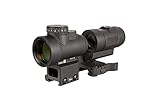
Best Overall: Trijicon MRO HD – The Montana Mountain Tested Champion
- Great Product
After putting the MRO HD through two full seasons in Montana’s unforgiving wilderness, this optic has earned its place as my primary turkey scope. The 68 MOA circle with 2 MOA center dot is perfectly sized for turkey vitals—large enough for quick acquisition but precise enough for ethical shots at the neck-head junction.
What Sets It Apart:
- Crystal-clear glass that performs in low-light conditions when turkeys are most active
- Bombproof durability that’s survived countless pack-ins to remote hunting areas
- Five-year battery life means you won’t be changing batteries mid-season
- Wide field of view prevents tunnel vision during high-stress moments
I’ve dunked this scope crossing swollen creeks, banged it against granite outcroppings, and subjected it to temperature swings from below-freezing dawn hunts to 80-degree afternoons. It holds zero every time and the glass clarity rivals optics costing twice as much.
Field Performance Notes: The slight blue tint some shooters mention has never affected my target acquisition in real hunting scenarios. When a gobbler is strutting at 30 yards, you’re focused on placing that dot precisely—not analyzing glass color. The MRO HD delivers when it matters most.
Best For: Serious turkey hunters who want maximum reliability and performance across all conditions.
Best for Precision Shots: Leupold Freedom RDS – The Long-Range Specialist

- Model #180093 – Freedom RDS, 1.0 MOA BDC and a Matte finish w/Mount
When I guide hunters in Montana’s open country where shots can stretch to 50+ yards, the Freedom RDS consistently delivers. That crisp 1 MOA dot allows for surgical precision on distant birds, and the motion sensor technology conserves battery during long sits.
Key Advantages:
- Pinpoint 1 MOA dot for precise shot placement
- Motion sensor automatically adjusts brightness based on movement
- Leupold’s legendary durability withstands harsh field conditions
- Clear glass performs well in varying light conditions
I’ve used this scope extensively during guided hunts in the Bitterroot Mountains, where open meadows often require longer shots than typical eastern turkey hunting. The 1 MOA dot gives hunters confidence to make ethical shots at extended ranges while still being visible enough for quick acquisition.
Real-World Example: Last season, I had a client make a clean harvest on a tom at 48 yards using the Freedom RDS. The bird was strutting in an open burn area, and the precise dot allowed perfect shot placement despite the distance. That’s the kind of versatility serious turkey hunters need.
Best For: Hunters who frequently encounter longer shots or want maximum precision for challenging scenarios.
Best for Close Quarters: Aimpoint Micro S-1 – The Thick Cover Specialist
In Montana’s dense riparian areas where shots happen fast and close, the Micro S-1’s 6 MOA dot shines. Its compact profile won’t snag on brush, and the large, bright dot is instantly visible even in heavy shade. View Price
Why It Excels:
- 6 MOA dot provides lightning-fast target acquisition
- Ultra-compact design won’t interfere with your shooting form
- Legendary Aimpoint reliability from a company with military heritage
- 50,000-hour battery life means it’s always ready
This scope has bailed me out numerous times when hunting thick willows along creek bottoms. When a tom suddenly appears through heavy cover, that large, bright dot allows instant target acquisition—critical when you have seconds to make the shot.
Grandfather’s Wisdom Applied: My grandfather always said, “The best shot is the one you can take quickly and confidently.” The Micro S-1 embodies this philosophy—it may not have the precision of smaller dots, but for most turkey hunting scenarios, speed trumps surgical precision.
Best For: Hunters who primarily hunt thick cover or prefer lightning-fast target acquisition over long-range precision.
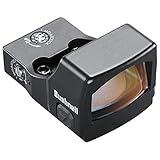
Best Value: Bushnell RXS-250 – The Budget Champion That Delivers
- BUSHNELL is a leading Optics manufacturer based in the USA that has been serving the outdoor and wildlife enthusiast for more than 70 years
Don’t let the modest price fool you—the RXS-250 has proven itself during countless hunts across Montana’s varied terrain. This scope demonstrates that quality doesn’t always require breaking the bank.
Value Proposition:
- 4 MOA dot strikes perfect balance between speed and precision
- Incredibly lightweight at 1.6 ounces
- IPX7 waterproofing handles Montana’s unpredictable spring weather
- 50,000-hour battery life rivals much more expensive optics
I’ve equipped several of my guided hunting clients with the RXS-250, and it consistently performs when birds are on the ground. The 4 MOA dot provides excellent visibility while maintaining enough precision for ethical shots within typical turkey ranges.
Field Testing Reality: This scope survived a full season mounted on my backup shotgun, enduring everything from early-season snowstorms to late-season thunderstorms. It held zero through hundreds of rounds during practice sessions and never failed when it mattered.
Best For: New turkey hunters, budget-conscious sportsmen, or anyone wanting proven performance without premium pricing.
Essential Features for Turkey Hunting Red Dots
Reticle Design and Dot Size
Through years of field experience, I’ve learned that dot size significantly impacts hunting success. A 2-4 MOA dot provides the sweet spot for most turkey hunting—visible enough for quick acquisition but precise enough for clean kills.
Dot Size Guidelines:
- 2 MOA: Maximum precision for longer shots, requires good lighting
- 4 MOA: Excellent all-around choice for most hunting scenarios
- 6 MOA: Best for close-range work and low-light conditions
The segmented circle reticle on the Trijicon MRO HD deserves special mention. That outer circle helps frame your target area while the precise center dot ensures accurate shot placement—especially valuable when adrenaline is pumping and a trophy tom is in range.
Battery Life and Reliability
Nothing ruins a hunt faster than dead batteries. During my military days, we learned that gear failure often happens at the worst possible moment. Choose optics with exceptional battery life and always carry spares.
Battery Life Expectations:
- Minimum acceptable: 1,000 hours
- Good performance: 10,000+ hours
- Exceptional: 50,000+ hours (Aimpoint/Bushnell tier)
I once had a budget optic die during a memorable hunt in the Cabinet Mountains. The tom was closing distance fast, and I had to resort to iron sights for a successful harvest. That experience taught me never to skimp on battery life—it’s worth paying extra for reliability when it counts.
Durability and Weather Resistance
Montana spring weather can be brutal—snow squalls, driving rain, temperature swings of 40 degrees in a single day. Your optic must handle whatever nature throws at it.
Weather Protection Essentials:
- Waterproof rating: IPX7 minimum for serious hunting
- Shock resistance: Must survive drops, impacts, and recoil
- Temperature stability: Should function from freezing to 100°F
- Fog-proof performance: Critical for dawn and dusk hunting
Every scope I recommend has survived my “creek test”—a deliberate dunking during stream crossings to simulate real hunting conditions. If it can’t handle getting wet, it doesn’t belong on a turkey gun.
Size and Weight Considerations
After carrying gear through thousands of miles of Montana wilderness, I’ve learned that every ounce matters. Lightweight optics reduce fatigue and improve handling, especially during long spot-and-stalk hunts.
Weight Categories:
- Ultra-light: Under 2 ounces (Bushnell RXS-250)
- Lightweight: 2-4 ounces (most quality red dots)
- Standard: 4-7 ounces (acceptable for most hunters)
Compact profiles also matter. Bulky optics snag on brush and interfere with natural shooting form. The best turkey hunting red dots blend seamlessly with your shotgun’s lines.
Mounting and Setup for Maximum Performance
Proper mounting determines whether your red dot scope becomes a hunting asset or liability. Through my gunsmithing experience and years of helping clients set up equipment, I’ve learned what works and what doesn’t.
Height and Position
Mount your red dot at a height that allows natural cheek weld without raising your head. Most turkey hunters benefit from low or medium-height mounts, depending on stock design and personal anatomy.
Mounting Guidelines:
- Low mounts: Best for traditional stocks and compact scopes
- Medium mounts: Good compromise for most hunters and scope combinations
- High mounts: Only necessary for stocks with high combs or specific scope designs
I always test mounting height using an unloaded gun at home. Shoulder the weapon naturally and see where your eye aligns with the optic. If you’re straining to see the dot, adjust mount height accordingly.
Zeroing Process
Proper zeroing ensures ethical shots when opportunities arise. I zero all my turkey guns at 25 yards—close enough for precision but representative of most turkey hunting distances.
My Zeroing Protocol:
- Start at 10 yards to get on paper safely
- Move to 25 yards for final zero
- Confirm zero at 40 yards to understand trajectory
- Test in various lighting conditions
Remember that shotgun patterns open significantly with distance. Even with perfect scope zero, you must understand your choke and load combination’s effective range.
Backup Iron Sights
Technology fails—batteries die, electronics malfunction, scopes break. I always maintain backup iron sights on my turkey guns, positioned to co-witness with the red dot when possible.
During one hunt in the Crazy Mountains, my primary scope fogged internally due to a seal failure. Those backup sights saved the hunt and taught me never to rely solely on electronics in the field.
Common Red Dot Mistakes to Avoid
Choosing the Wrong Dot Size
Many hunters select dots that are too small, thinking precision equals performance. In reality, a dot you can’t see quickly is worthless when a tom appears unexpectedly.
Dot Size Reality Check:
- Can you see the dot instantly in various lighting conditions?
- Does the dot cover too much of the target area at your maximum shot distance?
- Can you acquire the dot quickly from awkward shooting positions?
Ignoring Battery Management
Even scopes with exceptional battery life require attention. I change batteries at the start of each season regardless of remaining life—fresh batteries provide peace of mind during crucial moments.
Battery Best Practices:
- Use quality batteries from reputable manufacturers
- Carry spares in waterproof containers
- Test brightness settings before each hunt
- Know your scope’s low-battery warning signs
Poor Mounting Decisions
Cheap mounts create problems. I’ve seen quality scopes fail because hunters tried to save money on mounting hardware. The mount must be as reliable as the optic itself.
Mount Selection Criteria:
- Materials should match or exceed scope durability
- Return-to-zero capability for maintenance and transport
- Proper height for your shooting style and gun setup
- Reputation for reliability under recoil
Advanced Red Dot Techniques for Turkey Hunting
Low-Light Performance
Turkey hunting often happens during dawn and dusk when lighting challenges your equipment and skills. Understanding how to maximize your red dot’s low-light performance provides significant advantages.
Low-Light Strategies:
- Use lower brightness settings to preserve night vision
- Practice acquiring the dot in dim conditions
- Understand how different dot sizes perform in limited light
- Consider scopes with automatic brightness adjustment
Multiple Target Scenarios
Occasionally, multiple toms present themselves simultaneously. Red dots excel in these situations because they allow rapid target transition without losing sight picture.
Last spring near Livingston, two mature toms entered my setup together. The red dot allowed me to track both birds and make a quick decision when one presented a better shot opportunity. Traditional scopes would have made this transition much more difficult.
Wind and Weather Adaptations
Montana’s infamous winds affect both turkey behavior and shooting conditions. Red dots simplify shooting in windy conditions because you’re not fighting scope magnification or trying to hold steady sight alignment.
Wind Hunting Tips:
- Red dots eliminate parallax issues that plague traditional scopes
- Bright dots remain visible even when your eye waters from wind
- Quick target acquisition becomes critical when birds move erratically
Maintenance and Care in the Field
Cleaning and Protection
Quality optics deserve quality care. I clean my red dot lenses religiously using proper techniques learned during my military service.
Field Cleaning Protocol:
- Use lens-safe cleaning cloths only
- Remove debris with gentle air or soft brush first
- Clean in circular motions from center outward
- Protect lenses with quality covers when not hunting
Storage and Transport
Proper storage extends optic life and maintains zero. I transport scoped guns in padded cases and remove batteries during long-term storage.
Storage Best Practices:
- Use desiccants in storage containers
- Avoid extreme temperature changes
- Check zero after transport to hunting areas
- Protect adjustment turrets from accidental movement
Red Dots vs. Traditional Scopes for Turkey Hunting
Having used both extensively, I can definitively state that red dots offer significant advantages for most turkey hunting scenarios. However, understanding when traditional scopes might be preferable helps make informed decisions.
Red Dot Advantages
Speed of Target Acquisition: Red dots win decisively here. When a tom appears unexpectedly, every second counts. Red dots allow instant target acquisition regardless of shooting position.
Versatility in Shooting Positions: Unlimited eye relief means you can shoot effectively from any position. This flexibility has saved countless hunts when birds forced awkward shooting situations.
Low-Light Performance: Quality red dots often outperform traditional scopes in marginal light conditions common during turkey hunting.
When Traditional Scopes Excel
Maximum Range: For shots beyond 50 yards, traditional scopes with magnification provide advantages in target identification and precise shot placement.
Detailed Target Assessment: Magnified scopes help distinguish toms from jakes at distance and assess trophy quality before shooting.
Battery Independence: Mechanical scopes never fail due to dead batteries—an important consideration for remote hunting areas.
Seasonal Considerations for Red Dot Selection
Early Season Challenges
Montana’s early turkey seasons often feature challenging weather conditions. Snow, rain, and temperature extremes test equipment reliability.
Early Season Priorities:
- Maximum weather resistance
- Reliable performance in cold temperatures
- Clear glass for low-light conditions
- Rugged construction for harsh conditions
Late Season Advantages
By late season, weather typically improves but hunting pressure increases. Educated birds require different tactics and equipment considerations.
Late Season Factors:
- Increased shooting distances as birds become wary
- Better lighting conditions favor smaller dots
- Need for rapid target acquisition as birds move quickly
- Importance of backup systems as season winds down
Building Your Complete Turkey Hunting System
A red dot scope represents just one component of an effective turkey hunting system. Understanding how all pieces work together maximizes field success.
Shotgun Selection
Your red dot choice should complement your shotgun’s characteristics. Short-barreled guns benefit from compact scopes, while longer barrels can accommodate larger optics.
Shotgun Considerations:
- Barrel length affects balance with optic attached
- Stock design influences proper mount height
- Action type may limit scope mounting options
- Recoil characteristics affect scope durability requirements
Ammunition Compatibility
Modern turkey loads perform best when matched to appropriate scopes. High-velocity loads require durable scopes, while heavier shot benefits from precise aiming points.
Load Matching:
- Pattern your chosen load with your scope setup
- Understand point of impact changes with different loads
- Test performance at various distances
- Verify scope holds zero with heavy turkey loads
Environmental Factors
Montana’s diverse hunting environments require adaptable equipment. From high-altitude hunts near Glacier Park to river bottom hunts along the Missouri, conditions vary dramatically.
Environmental Adaptations:
- Altitude affects battery performance and scope adjustments
- Humidity impacts lens fogging and clarity
- Temperature extremes test scope reliability
- Terrain influences preferred scope characteristics
Safety Considerations with Red Dot Optics
Safety must always be the top priority when hunting. Red dots change certain safety dynamics compared to traditional scopes, and understanding these differences prevents accidents.
Target Identification
Red dots excel at quick target acquisition but may compromise target identification at distance. Always positively identify your target before shooting.
Identification Protocol:
- Use binoculars for distant target assessment
- Confirm turkey species and sex before engaging
- Ensure clear shooting lanes beyond your target
- Be aware of other hunters in the area
Range Estimation
Without magnification, red dots provide fewer visual cues for accurate range estimation. Develop skills for judging distance in various terrain.
Range Estimation Skills:
- Practice estimating distances in different environments
- Use landmark references for common shooting distances
- Understand your pattern density at various ranges
- Consider rangefinder use for challenging situations
Equipment Redundancy
Electronics fail, batteries die, and scopes break. Maintaining backup systems ensures safe, effective hunting even when primary equipment malfunctions.
Backup Systems:
- Quality iron sights co-witnessed with red dot
- Extra batteries in waterproof containers
- Basic tools for field adjustments
- Alternative hunting strategies if optics fail
Looking Forward: The Future of Turkey Hunting Optics
Technology continues advancing, but fundamental hunting skills remain constant. The best optic is the one you can use effectively when it matters most.
Emerging Technologies
Solar-powered scopes, improved battery life, and enhanced durability represent current innovation directions. However, proven reliability trumps cutting-edge features for serious hunting applications.
Time-Tested Principles
Regardless of technological advances, certain principles remain constant: reliability, durability, and ease of use under stress. Choose equipment that excels in these areas over flashy features that may fail when needed most.
Final Thoughts: Choose Your Red Dot Wisely
After three decades of turkey hunting across Montana’s diverse landscapes, I’ve learned that equipment success isn’t measured by price tags or marketing claims—it’s proven in the field when birds are on the ground and adrenaline is pumping.
The Trijicon MRO HD remains my top choice because it consistently performs when everything is on the line. Its clarity, durability, and practical reticle design have never let me down during critical moments. For hunters wanting maximum versatility and proven reliability, it’s worth the investment.
However, the best red dot scope is the one that fits your specific hunting style, budget, and needs. The Bushnell RXS-250 has put just as many birds on the ground for my clients as more expensive optics. What matters most is understanding your equipment thoroughly and practicing with it regularly.
Remember my grandfather’s wisdom: “Practice makes permanent, so practice it right.” Whatever red dot you choose, spend time with it in various conditions. Understand its capabilities and limitations. When that Montana tom finally steps into range, you’ll be ready to make the shot that counts.
The wilderness doesn’t care about your equipment’s price tag—it only cares whether you can deliver when opportunity presents itself. Choose wisely, practice diligently, and respect both the game and the land that provides these incredible hunting experiences.
Now get out there and put these insights to work. Those spring gobblers are waiting, and with the right red dot scope and proper preparation, you’ll be ready for whatever they throw at you.
Want to explore more turkey hunting strategies and gear recommendations? Check out our complete guides to turkey calling techniques, camouflage selection, and hunting ethics. At Moosir, we’re committed to helping you become a more successful and responsible hunter while deepening your connection to the outdoors.