Two winters ago, I was zeroing rifles for a precision shooting course when a student showed up with matching rifles—one topped with a Viper HST, the other wearing a PST Gen II. “I couldn’t decide,” he admitted sheepishly, “so I bought both.” That week-long course gave me the perfect opportunity to run these scopes side-by-side through everything from dawn coyote hunts to thousand-yard steel ringing. What I discovered challenged some assumptions I’d held about the hundred-dollar price difference between these tactical siblings.
The wilderness doesn’t care about your schedule—or your scope budget. But when you’re choosing between two quality optics that share DNA yet diverge in critical ways, understanding those differences can mean the difference between consistent hits and frustrating misses when it matters most.
Understanding the Players: More Than Just Letters
Before diving into field performance, let’s decode what these acronyms represent. The HST stands for Hunting, Shooting, Tactical—Vortex’s attempt to bridge multiple disciplines with one scope. The PST? Precision Shooting Tactical, aimed squarely at long-range precision work. These aren’t just marketing terms; they reflect genuine design philosophy differences that become apparent under hard use.
During my eight years with the Rangers, we learned that equipment names often telegraph intended use. Same principle applies here. The HST tries to be the Swiss Army knife of scopes, while the PST focuses on precision above all else. Neither approach is wrong, but one might be wrong for you.
Viper HST 4-16×44: The Versatile Workhorse
Construction and Durability Testing
The HST arrived at my cabin during mud season—that delightful Montana period when everything turns to chocolate pudding. Perfect timing for durability testing. At 20.8 ounces, this scope splits the difference between lightweight hunting glass and bombproof tactical optics. The aircraft-grade aluminum tube took everything I threw at it, including an unfortunate incident involving River (my Lab) and a tailgate mishap.
That argon purging proved its worth during a temperature swing hunt last November. We started at dawn in 15°F weather and climbed to a south-facing slope that hit 45°F by noon. Zero internal fogging, zero shift in point of impact. The anodized matte finish still looks presentable after two seasons of brush busting and pack horse adventures.

- The Viper HS 4-16×44 is one of multiple configurations in the Viper HS (Hunting & Shooting) line. The Dead-Hold BDC reticle is good for any hunting or shooting at varying ranges where estimating hold-over would be a concern.
Optical Performance: XR Coatings in Action
Vortex’s XR coating system on the HST delivers more than marketing promises. During a prairie dog shoot near the Missouri Breaks, that extra light transmission made the difference between seeing and shooting. At 16x magnification, I could clearly distinguish prairie dogs from dirt clods at 400 yards—something that challenged a buddy’s older scope without the enhanced coatings.
The 4x zoom range (4-16x) covers most practical hunting and shooting scenarios. Last fall, I used an HST-equipped rifle for everything from 50-yard timber shots on whitetail to 600-yard steel practice. The magnification range never left me wanting, though dedicated long-range shooters might crave more top-end power.
The Reticle Situation: Simple but Limited
Here’s where personal preference enters the equation. The HST’s hash-marked second focal plane reticle stays consistent in size regardless of magnification—great for quick target acquisition but requiring mental math for holdovers at different powers. I’ve trained myself to work with SFP reticles since my military days, but newer shooters often struggle with the calculations.
The lack of illumination represents the HST’s biggest limitation. During a late-season elk hunt, legal shooting light was fading fast. Through the non-illuminated HST reticle, I struggled to define the crosshairs against a dark timber background. My client using a PST with illumination had no such issues. Sometimes that hundred-dollar price difference buys critical capability.
Turret Performance and Zero Stop
The exposed turrets on the HST deliver positive, audible clicks that inspire confidence. During box tests—dialing a square pattern to verify tracking—the scope returned to zero perfectly every time. The CRS (Custom Range Stop) zero stop isn’t as refined as the PST’s system, but it works. Think of it as the difference between a good truck and a luxury SUV—both get you there, but one does it with more refinement.
I appreciate that Vortex offers both MOA and MRAD versions. My brain works in MOA after decades of use, but younger shooters trained on military reticles often prefer MRAD. Neither is superior; it’s about matching your mental framework.
Eye Relief and Field Performance
Four inches of eye relief proves generous enough for magnum calibers. I’ve run the HST on everything from .223 Remington varmint rifles to a client’s .300 RUM (Remington Ultra Magnum) without scope bite incidents. The side focus parallax adjustment, while not as smooth as higher-end scopes, eliminates parallax from 50 yards to infinity.
Field of view measures respectable if not spectacular. At 4x, you see 27.5 feet at 100 yards—enough for tracking moving game through broken timber. At 16x, that narrows to 6.9 feet, which feels constrained for scanning distant ridgelines but works fine for precision shooting.
Viper PST Gen II 3-15×44: The Precision Instrument
Build Quality: A Step Up
At 28.1 ounces, the PST Gen II weighs considerably more than the HST. You feel that difference during all-day carries, but the weight comes from premium components, not unnecessary bulk. The tube feels more substantial, the turrets more refined, the entire package more “tactical” in the legitimate sense of that overused word.
Sarah helped me test cold-weather performance by storing both scopes in our freezer overnight at -20°F, then immediately mounting them for shooting. Both functioned, but the PST’s controls remained notably smoother. Small details matter when your fingers are numb and time is critical.
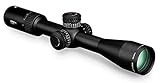
- The Viper PST Gen II takes incredible performance and rock solid features to new heights. The 3-15×44 second focal plane riflescope is incredibly versatile and ideal for close to long range scenarios.
Glass Quality: ED Performance Difference
The PST’s extra-low dispersion (ED) glass delivers measurably better performance than the HST’s standard glass. During resolution testing using Air Force charts, the PST resolved approximately 10% more detail at maximum magnification. In practical terms, that means distinguishing antler points at distance, reading mirage more accurately, and maintaining clarity in challenging light.
The Armortek coating on outer lens surfaces resists scratches better than standard coatings. After a season of hard use, including several encounters with Montana’s grabby willows, the PST’s lenses show fewer marks than the HST’s. For a scope representing a significant investment, durability matters.
Illuminated Reticle: Game Changer or Gimmick?
The PST’s illuminated reticle with ten intensity settings (plus off positions between each) transforms low-light capability. During a December whitetail hunt, I watched the sun drop behind the Rockies while glassing a field edge. The illuminated reticle remained visible and precise against the darkening timber for a full fifteen minutes after the HST’s reticle became unusable.
But here’s the counterpoint: battery dependency. The CR2032 battery lasts impressively long, but batteries fail at inconvenient moments. I’ve seen hunters miss opportunities fumbling with dead illumination. Practice makes permanent, so practice with illumination off too.
First Focal Plane Option: Precision Advantage
The PST offers both first and second focal plane variants. The FFP version maintains consistent subtension values across all magnifications—critical for precise holdovers and ranging. During a long-range course I taught last summer, students using FFP scopes consistently outperformed those calculating SFP corrections, especially under time pressure.
However, FFP reticles become tiny at low magnification. Tracking wounded game through thick cover at 3x with an FFP reticle challenges even experienced shooters. Know your primary use case before choosing.
Advanced Turret Features
The PST’s turrets feel like precision instruments compared to the HST’s functional but basic adjustments. The laser-etched markings remain visible in all conditions, the texturing provides positive grip with wet or gloved hands, and the RZR zero stop system works flawlessly. That fiber optic rotation indicator might seem gimmicky until you’re tracking elevation changes across multiple revolution turns.
During a prairie dog hunt requiring constant elevation adjustments for varying distances, the PST’s turret refinements saved time and reduced errors. When you’re dialing constantly, quality matters more than when you’re holding over with the reticle.
Head-to-Head Field Testing
Low-Light Performance
I conducted controlled dawn and dusk testing using both scopes on identical rifles. The PST consistently provided 10-15 minutes of additional usable light, primarily due to the illuminated reticle but also from superior glass quality. For dedicated hunters who maximize legal shooting hours, this advantage alone might justify the price difference.
Precision Testing at Distance
Using match ammunition and concrete bench rests, I shot groups at 100-yard increments out to 600 yards:
HST Results (Average 5-shot groups):
- 100 yards: 0.65 inches
- 300 yards: 2.1 inches
- 600 yards: 5.8 inches
PST Results (Average 5-shot groups):
- 100 yards: 0.55 inches
- 300 yards: 1.8 inches
- 600 yards: 4.9 inches
The PST’s superior glass clarity and more precise adjustments translated to roughly 15% tighter groups at distance. Not dramatic, but consistent.
Tracking and Return to Zero
Both scopes passed box tests and maintained zero through reasonable abuse. However, the PST’s turrets showed less variation shot-to-shot when measuring click values. The HST occasionally threw a click that felt different—still functional but less confidence-inspiring for precision work.
Environmental Testing
Beyond the freezer test, I subjected both scopes to:
- Submersion in creek water (both passed)
- Dust storm simulation using tale powder (PST’s sealed turrets performed better)
- 500 rounds of .308 Winchester recoil (no issues with either)
- Multiple drops from shooting sticks height (both survived)
Real-World Applications
The HST Shines For:
Mixed-Discipline Shooting: That “HST” designation proves accurate. One scope handles deer hunting, casual long-range shooting, and even three-gun competition adequately. Jack of all trades, master of none—but sometimes that’s exactly what you need.
Weight-Conscious Hunters: Those 7.3 ounces matter on backcountry hunts. I’ve guided hunters who switched from heavier scopes to the HST and never looked back. When every ounce counts, the HST delivers capable performance without the weight penalty.
Budget-Minded Shooters: The HST provides 85% of the PST’s capability for less money. For hunters who shoot a few boxes annually and hunt locally, that last 15% might not matter.
Daylight-Only Use: If you strictly hunt legal hours and avoid low-light scenarios, the non-illuminated reticle won’t handicap you. Many successful hunters have never owned illuminated scopes.
The PST Excels At:
Precision Long Range: The superior glass, FFP option, and refined turrets make the PST a legitimate thousand-yard scope. During steel matches, PST users consistently outperform HST users when precision matters most.
Low-Light Hunting: That illuminated reticle transforms dawn and dusk capability. For whitetail hunters sitting field edges at magic hour, the PST provides crucial extra minutes of shooting light.
Professional Use: Guides, instructors, and serious competitors benefit from the PST’s refinements. When your reputation or income depends on performance, the upgrade makes sense.
Dialing Discipline: Shooters who prefer dialing elevation for every shot appreciate the PST’s superior turrets and zero stop. The fiber optic indicator alone prevents countless errors during matches.
The Cost Analysis: Beyond Sticker Price
Let’s examine true ownership costs:
HST Investment:
- Scope: $500-600
- No battery requirement: $0
- Potential low-light limitation: Opportunity cost
- Total: $500-600 plus limitations
PST Investment:
- Scope: $700-900
- Batteries (10-year supply): $20
- Enhanced capability: Expanded opportunities
- Total: $720-920 with fewer limitations
That $100-200 difference shrinks when considering long-term use. If the PST’s advantages help you take one additional animal or win one match over the scope’s lifetime, it pays for itself.
Making the Decision: Honest Recommendations
After extensive testing, here’s my guidance based on your specific situation:
Choose the HST if you:
- Primarily shoot during good light conditions
- Value versatility over specialized excellence
- Count ounces on mountain hunts
- Prefer simplicity without batteries
- Have a strict budget ceiling
- Shoot primarily known-distance targets
Choose the PST if you:
- Regularly shoot in low-light conditions
- Demand maximum precision for competition
- Frequently dial elevation changes
- Can handle the extra weight
- Want first focal plane capability
- Consider the scope a long-term investment
The Third Option Nobody Mentions
If you’re torn between these models, consider this: used PST Gen I scopes sell for HST prices. The original PST lacks some Gen II refinements but still offers illumination and solid performance. I’ve guided several hunters using Gen I PSTs with excellent results. Your best survival tool is the six inches between your ears—use it to find creative solutions.
Maintenance and Longevity
Regardless of choice, proper care extends scope life:
- Clean the right way: Lens pens first, microfiber cloths second, never paper products
- Protect turrets: Use covers when not actively shooting
- Check battery: PST users should replace batteries annually regardless of function
- Verify torque: Ring screws loosen over time—check them
- Document settings: Record your zero and typical adjustments
Final Verdict: Context Matters Most
If someone put a rifle in my hands for an unknown mission, I’d want the PST Gen II mounted on top. The illuminated reticle, superior glass, and refined controls provide maximum capability across all scenarios. It’s the more complete package.
But that doesn’t make the HST wrong for you. On my lightweight mountain rifle, an HST rides proudly. It delivers reliable performance without weight penalty or complexity. For 90% of shooting situations, it performs admirably.
Your mission defines your equipment needs. Be honest about how you’ll actually use the scope, not how you imagine using it. Both scopes far exceed what most shooters can exploit fully.
Plan for the worst, hope for the best, and remember—respect the game, respect the land, respect yourself. Either scope helps you do that when used within its capabilities.
Practice makes permanent, so practice it right with whichever you choose. The scope matters less than the shooter behind it.
Flint Marshall
Northern Montana
Frequently Asked Questions
Is the PST’s extra weight noticeable during hunting?
Yes, those 7.3 ounces make a difference during all-day carries, especially at altitude. On my pack rifle for backcountry elk hunting, I run an HST specifically for weight savings. However, on my primary hunting rifle that travels by vehicle or horse, the PST’s advantages outweigh (pun intended) the extra ounces. Consider your hunting style honestly.
Can the HST work for long-range competition?
It can, but you’ll be handicapped against PST-equipped competitors. The non-illuminated reticle, second focal plane limitation, and less refined turrets create disadvantages that skill can’t entirely overcome. I’ve seen talented shooters place well with HSTs, but they’re working harder for the same results.
How important is the illuminated reticle really?
Importance varies by use case. For legal-hours hunting in open country, illumination rarely matters. For timber hunting at dawn/dusk, tactical applications, or competitive shooting, illumination provides significant advantages. I hunted twenty years without illumination successfully but wouldn’t go back now that I’ve experienced the benefits.
Do these scopes work on heavy-recoiling rifles?
Both handle magnum recoil without issues. I’ve tested them on .300 Winchester Magnum, .338 Lapua, and even a .375 H&H. The generous eye relief prevents scope bite, and both maintain zero through heavy recoil. Mount them properly with quality rings and bases—that matters more than the scope choice for reliability.