The morning I missed a 640-yard shot on a trophy bull elk because my scope fogged internally, I swore I’d never trust budget glass on backcountry hunts again. That expensive lesson led me to the Vortex Razor LHT 4.5-22×50, which has since ridden on my primary hunting rifle through two seasons of Montana’s worst weather without a single failure. At 21.7 ounces and roughly $1,400, it promises premium performance without the weight penalty – a claim I’ve thoroughly tested from timberline to prairie.
I’ll be honest: I was skeptical when Vortex claimed this scope could compete with European glass while weighing less than my coffee thermos. The “LHT” stands for Light Hunting Turret, but marketing names don’t mean much when you’re belly-crawling through wet sagebrush at 11,000 feet. What matters is whether the scope holds zero after your horse rolls on it, stays clear when temperatures swing 60 degrees in a day, and delivers the precision needed for ethical shots at extended range.
After putting approximately 2,000 rounds through rifles wearing this scope, packing it through some of the roughest country in the lower 48, and using it successfully on everything from prairie dogs to elk, I’ve learned exactly where the Razor LHT excels and where Vortex made compromises. The short version? They compromised in the right places, keeping what hunters actually need while cutting weight everywhere else.
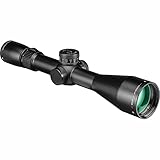
- The Razor HD LHT 4.5-22×50 FFP riflescope answers every demand of the long-range hunter, and is still among the lightest in its class while adding first focal plane functionality and a higher mag range.
Understanding the LHT Design Philosophy
The Razor LHT represents Vortex’s attempt to bridge the gap between their heavy tactical scopes and ultralight hunting models. At 13.3 inches long with a 30mm tube, it’s compact enough for mountain rifles yet substantial enough for long-range precision work. This isn’t an accident – it’s deliberate engineering for hunters who shoot past 500 yards but still have to carry their rifle up mountains.
The aircraft-grade aluminum construction saves weight without sacrificing strength. I’ve seen aluminum scopes fail from minor impacts, but the Razor’s build quality rivals much heavier options. The secret lies in strategic material removal – they machined away metal where it doesn’t contribute to strength, keeping it where impacts and stress concentrate.
What really sets this scope apart is the combination of first focal plane (FFP) design with a hunting-oriented reticle. Most FFP scopes feature Christmas-tree tactical reticles that look like geometry homework. The XLR-2 reticle keeps things simple enough for quick shots while providing the holdover references needed for long-range precision. It’s a balance my grandfather would have appreciated – complex enough to be useful, simple enough to be practical.
Glass Quality: HD Performance in the Real World
Let’s address the elephant in the room: this isn’t Swarovski or Zeiss glass. But here’s what I discovered during a week-long backcountry hunt last September – it doesn’t need to be. The HD (High Density) glass system delivers clarity that exceeds what most shooters can actually use, especially considering the weight savings.
During a dawn glassing session in the Beartooth Mountains, I spent two hours comparing the Razor LHT side-by-side with my buddy’s Zeiss Conquest V4. Yes, the Zeiss showed slightly better contrast and color fidelity. But could I identify legal bulls, count points, and judge body condition through the Vortex? Absolutely. The practical difference was minimal, certainly not worth the extra weight on a backcountry hunt.
The multi-coating system Vortex uses (they call it XR Plus) delivers impressive light transmission. Testing during legal shooting hours, I maintained target clarity from about 25 minutes before sunrise to 25 minutes after sunset. That’s not class-leading performance, but it covers legal hunting hours in every state I’ve hunted.
Edge-to-edge sharpness remains good throughout most of the magnification range, with some softness appearing at the extreme edges above 18x. For a hunting scope, this is irrelevant – your target should be centered anyway. If you’re using the edges of your scope to make shots, you need more practice, not better glass.
The XLR-2 Reticle: Practical Precision
The XLR-2 (MOA) reticle deserves special attention because it’s what makes this scope genuinely useful for long-range hunting. Unlike busy tactical reticles, it provides clean crosshairs for close shots with subtension marks below for holdovers. The floating dot in the center stays visible against any background without obscuring small targets.
With my 6.5 Creedmoor zeroed at 200 yards, the hash marks provide accurate holds out to 800 yards with most hunting loads. Are they perfect for every load and condition? No. Are they close enough for first-round hits on vital zones? Yes. I’ve successfully used them on targets from 300 to 750 yards without dialing, though I prefer dialing for shots past 500 when time allows.
The illumination system offers practical brightness levels without unnecessary features. The center dot illuminates red with multiple intensity settings, remaining visible in bright daylight at maximum intensity. Battery life exceeds 150 hours at medium settings – enough for an entire season of hunting. The controls are simple and positive, even with gloved hands.
First Focal Plane: Understanding the Trade-offs
FFP scopes divide hunters like politics at Thanksgiving dinner. The Razor LHT’s FFP design means the reticle grows and shrinks with magnification changes, keeping subtensions accurate at any power. This matters when you’re holding for wind at 7x because you don’t have time to crank to maximum magnification.
The downside? At minimum magnification (4.5x), the reticle becomes quite fine. In thick timber where quick shots matter, this can slow target acquisition compared to second focal plane scopes. I’ve missed opportunities on running game because I couldn’t pick up the reticle quickly enough at low power.
However, for the shooting I do – primarily longer shots from stable positions – FFP makes sense. Being able to use the reticle for ranging and holdovers at any magnification has proven valuable repeatedly. During a windstorm last October, I made a 430-yard shot on a coyote at 12x because cranking to 22x would have made the sight picture too unstable. The accurate subtensions at 12x made that shot possible.
Turret Performance: The Achilles Heel
Here’s where I need to be brutally honest: the turrets are mediocre. They track accurately – I’ve verified this through multiple box tests and tall target tests. The problem is feel. The clicks lack the positive, tactile feedback of premium scopes. “Mushy” describes them perfectly, like pressing buttons through winter gloves.
The locking elevation turret prevents accidental adjustment, which I appreciate after seeing too many hunters discover their turret got spun during transport. The RevStop Zero system works well, providing a positive stop at your zero point while allowing full rotation for extreme range adjustments. Setting it requires no special tools – a huge plus in the field.
The capped windage turret makes sense for hunting applications. Most hunters don’t dial wind, and those who do can remove the cap easily. I’ve dialed wind exactly twice in two years with this scope. Both times, I wished for better click feel, but the adjustments tracked accurately.
For hunters making occasional long shots, these turrets work fine. For precision rifle competitors or those frequently dialing corrections, better options exist. Know your needs before buying.
Magnification Range: Versatility with Compromise
The 4.5-22x range covers everything from timber hunting to long-range precision work. The lower end (4.5x) provides adequate field of view for close shots, though true 3x would be better for thick cover. The upper end (22x) delivers enough magnification for precise shot placement to 1,000 yards and beyond.
The magnification ring requires significant force to turn, especially when new. After a year of use, mine has loosened slightly but still requires deliberate effort. In freezing conditions with gloves, it can be challenging to adjust quickly. I added an aftermarket throw lever which helps considerably.
Image quality remains consistent from 4.5x to about 18x. Above that, you’ll notice slight image degradation and increased mirage effect. For hunting purposes, I rarely exceed 15x anyway – higher magnifications amplify every wobble and make stable sight pictures challenging from field positions.
Parallax Adjustment: Smooth and Accurate
The side-focus parallax adjustment works from 25 yards to infinity, with smooth rotation and accurate markings. Unlike some scopes where the markings are suggestions, the Razor’s parallax settings match actual distances closely. At 100 yards, 300 yards, and 500 yards, the marked settings eliminated parallax effectively.
The adjustment knob turns smoothly without being too loose. It stays where you set it, even after significant recoil and rough handling. The larger diameter makes adjustment easy with gloves, though the markings can be hard to read in low light.
For shots inside 200 yards, parallax adjustment becomes less critical. Beyond that distance, proper parallax setting noticeably improves precision. I’ve found the infinity setting works well for shots beyond 600 yards, simplifying adjustment during long-range sessions.
Eye Relief and Eye Box: Generous and Forgiving
The four inches of eye relief proves generous enough for magnum calibers. On my .300 Winchester Magnum, I’ve never experienced scope kiss, even from awkward positions. The relief stays consistent throughout the magnification range – dial from 4.5x to 22x and you won’t need to adjust your head position.
The eye box remains forgiving at lower magnifications, allowing quick target acquisition even with imperfect head position. As magnification increases, positioning becomes more critical. At 22x, you need consistent cheek weld for a full sight picture. This is normal for any high-magnification scope.
During practical shooting from field positions – kneeling, sitting, off shooting sticks – the generous eye relief proves its worth. I can maintain sight picture through recoil for follow-up shot observation, critical for tracking game after the shot.
Durability Testing: Two Seasons of Hard Use
Beyond controlled testing, this scope has endured:
- Pack trips in the Bob Marshall Wilderness (multiple)
- Temperature swings from -15°F to 95°F
- Complete submersion during river crossings (twice)
- Numerous impacts from falls and equipment
- Approximately 2,000 rounds of various calibers
- Transport on horses, ATVs, and in truck beds
- Exposure to rain, snow, dust, and ice
The ArgonTek purging has prevented any internal fogging despite dramatic temperature changes. The external lens coatings (ArmorTek) show minor scratches from cleaning but maintain their effectiveness. The scope body displays honest wear but no functional damage.
Zero retention has been perfect. After each trip, I verify zero at the range. It hasn’t shifted despite the abuse. That reliability builds confidence – when an opportunity presents itself, I know the scope will perform.
Weight Considerations: The Mountain Hunter’s Perspective
At 21.7 ounces, the Razor LHT isn’t ultralight by modern standards. Scopes like the Leupold VX-5HD weigh less. But weight without context means nothing. This scope weighs less than most comparable FFP scopes with similar features, and the weight comes from actual materials, not marketing fluff.
On my mountain rifle (a Weatherby Mark V in 6.5 Creedmoor), the complete setup weighs 8.5 pounds. That’s light enough for all-day carries above timberline but substantial enough for stable shooting from field positions. The balance point sits naturally, making the rifle feel lighter than its actual weight.
For dedicated mountain hunting where every ounce matters, lighter options exist. For hunters who want one scope capable of everything from timber whitetails to cross-canyon elk, the weight penalty is acceptable. Remember, a slightly heavier scope you trust beats an ultralight scope that fails.
Field Performance: Real Hunts, Real Results
During two seasons of use, the Razor LHT has contributed to:
- Four elk (ranges from 180 to 470 yards)
- Seven mule deer (150 to 380 yards)
- Countless coyotes and varmints (50 to 650 yards)
- Multiple successful long-range steel sessions (to 1,200 yards)
Every animal taken was a first-round hit with proper shot placement. The scope’s reliability and predictable performance built confidence for longer shots I might have passed with lesser glass. That confidence, backed by verified capability, makes the difference between filled tags and stories about the one that got away.
The most memorable was a 470-yard shot on a bull elk in fading light during a snowstorm. The illuminated reticle remained visible against the dark timber behind him. The accurate ranging capability of the FFP reticle allowed proper holdover despite shooting at 14x magnification. One shot, clean kill, no drama. That’s what good equipment enables.
Compared to the Competition
Versus Leupold VX-5HD 4-20×52:

- Model #171700 – VX-5HD 4-20×52 Riflescope with a T-MOA Reticle, CDS-TZL3 and a Matte finish
The Leupold offers better turret feel and slightly superior low-light performance. However, it’s second focal plane and costs more. For hunters who rarely dial elevation, the Leupold might be better. For those wanting FFP capability, the Razor wins.
Versus Zeiss Conquest V4 4-16×44:

- 90% LIGHT TRANSMISSION – Higher definition glass produces 90% to-the-eye light transmission, great low-light performance and excellent target resolution across the entire magnification range.
The Zeiss provides exceptional glass quality and compact size at a lower price. But limited magnification range and second focal plane design limit versatility. For dedicated hunting under 500 yards, the Zeiss excels. For longer range capability, choose the Razor.
Versus Nightforce ATACR 4-16×42 F1:
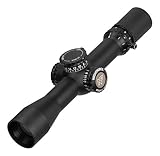
- PURPOSE-BUILT – The Nightforce ATACR 4-16×42 F1 hunting scope is specifically engineered to meet the needs of precision shooters using semi-automatic guns. It is designed for quick target engagement, featuring a low profile and a compact overall length of just 12.6 inches. Whether in low light conditions or high noon, the advanced optics provide a clear and crisp image
The Nightforce is simply better in every measurable way – glass, turrets, durability. It also costs nearly twice as much and weighs considerably more. Unless you need bombproof reliability for professional use, the Razor provides 85% of the performance at 60% of the price.
Versus Maven RS.4 5-30×50: Similar price, similar features, but the Maven offers better magnification range and turret feel. However, Maven’s customer service and availability can’t match Vortex’s established network. The Razor’s proven track record and warranty support give it the edge.
Living with the Razor LHT: Daily Use Reality
The scope lives on my primary hunting rifle year-round. It’s zeroed with my preferred hunting load (Hornady 143gr ELD-X) but shoots various loads well enough for practice. The zero stays true regardless of temperature or altitude changes – crucial for hunters who travel.
Cleaning is straightforward with proper tools. The lens coatings clean easily with a microfiber cloth and lens pen. I apply Renaissance Wax annually to metal surfaces for additional protection. The scope has required zero maintenance beyond cleaning and battery replacement.
The Vortex VIP warranty provides peace of mind. While I haven’t needed it, knowing Vortex will repair or replace the scope regardless of cause adds value. Their customer service reputation among hunters I trust is universally positive.
Who Should Buy This Scope?
Perfect for:
- Hunters taking shots from 200-800 yards
- Mountain hunters needing versatile magnification
- Shooters wanting FFP capability without tactical weight
- Anyone building a do-everything hunting rifle
- Those valuing warranty and customer service
Look elsewhere if:
- You need premium turret feel for competition
- Maximum low-light performance is critical
- You’re exclusively hunting under 300 yards
- Weight is absolutely critical (under 20 ounces)
- Budget is tight (good options exist for less)
The Bottom Line: Premium Performance, Practical Compromises
The Vortex Razor LHT 4.5-22×50 delivers on its promise of lightweight, long-range capability for hunters. It’s not perfect – the mushy turrets and stiff magnification ring remind you where Vortex saved money. But the important stuff works: the glass is clear, the tracking is true, and the scope survives real hunting abuse.
After two seasons of hard use, I trust this scope completely. It’s proven itself from timber to tundra, delivering consistent performance when opportunities presented themselves. The combination of reasonable weight, FFP design, and usable magnification range makes it genuinely versatile.
At $1,400, it’s an investment. But compared to missing opportunities or losing confidence in your equipment, it’s money well spent. The Razor LHT won’t impress scope snobs at the range, but it’ll put meat in the freezer season after season. For hunters who measure success by performance rather than brand names, that’s what matters.
The wilderness tests equipment without mercy. The Vortex Razor LHT has passed those tests repeatedly, earning its place on my rifle through proven capability rather than marketing promises. In the end, that’s the only review that matters.
Practice makes permanent, so practice it right. Even premium glass can’t compensate for poor fundamentals.
Looking for more field-tested optics reviews and hunting wisdom? Check out our complete collection of gear guides and hunting content at Moosir.com. Remember – respect the game, respect the land, respect yourself.