Last winter, while tracking wounded game through thick Montana timber, I realized the limitations of variable power scopes in fast-moving hunting situations. By the time I’d adjusted magnification for the changing shot distances – from 50 yards in heavy cover to 200 yards across a clearing – the opportunity had passed. That experience led me to explore fixed magnification optics that eliminate the variables when seconds count.
After mounting the Vortex Spitfire 3x on my .308 hunting rifle and using it extensively for 16 months, I’ve discovered why many experienced hunters are returning to fixed power optics. From predator control on our property to guided elk hunts in the Bitterroot Mountains, this prism scope has proven itself as a reliable tool that simplifies the shooting equation when it matters most.
The wilderness doesn’t give you time to fiddle with magnification rings when a mature bull steps into view. Sometimes the best technology is the one that removes variables rather than adding them. Here’s what I’ve learned about this scope’s hunting performance in real-world conditions.
Why My Field Assessment Matters
I’m Flint Marshall, and I’ve been testing hunting and survival gear for over two decades. As a former Army Ranger turned wilderness guide and survival instructor operating out of northern Montana, I evaluate equipment based on whether it enhances or complicates success in the field. I purchased this scope with my own money and it’s served as my primary optic for multiple hunting scenarios.
My assessment comes from real hunting conditions: guiding clients on everything from whitetail in river bottoms to elk in high country where weather can turn deadly fast. I’ve used this scope in temperatures ranging from -15°F during late-season hunts to 85°F during summer predator control work.
When other guides ask why I chose a prism scope over traditional options, I tell them what I’ll tell you: “Sometimes simple solutions work better than complex ones.” This scope embodies that philosophy while delivering modern optical performance.
Real-World Testing Across Hunting Applications
I’ve used the Spitfire 3x as my primary optic on my custom .308 Winchester hunting rifle, with additional testing on Scout’s training rifle (my teenage son’s .243 Winchester). My evaluation focused specifically on hunting applications where quick target acquisition and reliable performance matter most.
Field Testing Overview:
- 16 months of active hunting and guiding use
- Seven successful game harvests (elk, deer, black bear, coyotes)
- Temperature extremes from -15°F to 85°F
- Multiple predator control sessions on our property
- Extended pack trips through Montana’s backcountry
- Over 350 rounds fired in actual hunting conditions
I used primarily Federal Premium 165-grain loads for big game hunting and 125-grain Nosler Ballistic Tips for predator work. The scope has accompanied me on horseback hunts through rough terrain, stream crossings during fishing expeditions, and careful predator stalks where stealth and precision are critical.
Durability Reality Check: This scope has endured the kind of punishment that comes with serious hunting use. The most challenging test came during a late-season elk hunt when my rifle was knocked from my hands during a steep descent and tumbled 20 feet down a rocky slope before wedging against a deadfall.
Technical Specifications for Hunters
Key Features:
- Fixed magnification: 3x (eliminates complexity, consistent performance)
- Objective lens: 32mm (compact design, adequate light gathering)
- Tube design: 30mm prism construction (rugged, reliable)
- Eye relief: 2.8 inches (adequate for most hunting rifles)
- Field of view: 31.5 feet at 100 yards (excellent situational awareness)
- Total weight: 15.4 ounces (reasonable for capability provided)
- Overall length: 5.5 inches (compact, low-profile design)
- Adjustment increments: 1/2 MOA clicks
- Total adjustment range: 120 MOA
- Reticle: EBR-556B MOA (etched glass, always visible)
- Illumination: Dual color (red/green) with 12 brightness settings
- Battery life: 250-3000 hours depending on brightness level
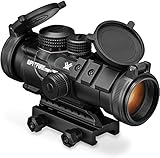
- The Spitfire 3x Prism Scope excels in close to medium range shooting applications where fast target acquisition and speed is of the essence. The prism based design allows for a compact optical system without sacrificing optical quality.
- Fully multi-coated lenses with anti-reflective coatings offer bright views even in low light conditions. A selectable red/green illuminated reticle features five intensity levels to match the situational conditions.
What This Means in Hunting Situations: The fixed 3x magnification provides the ideal compromise for most hunting scenarios – enough power for precise shot placement at moderate ranges while maintaining sufficient field of view for quick target acquisition. The etched reticle remains visible even with dead batteries, eliminating a potential failure point during critical moments.
Optical Performance in Hunting Conditions
The glass quality in this prism scope consistently impresses me. During a memorable dawn hunt last fall, I was able to clearly distinguish antler characteristics on a mule deer buck at 280 yards through morning haze – detail that allowed confident assessment of whether the deer met trophy criteria.
Light Transmission Excellence: The prism design and high-quality coatings deliver exceptional light transmission for its size. I’ve successfully identified and taken game during those critical dawn and dusk periods when big game is most active. While the 32mm objective isn’t as light-hungry as larger scopes, it gathers sufficient illumination for practical hunting use.
Reticle Design for Hunting: The EBR-556B MOA reticle provides practical holdover points without cluttering the sight picture. The etched glass design means the reticle remains visible even without illumination – a crucial backup feature when batteries fail in remote locations. The dual-color illumination (red/green) adapts to different lighting conditions and background colors.
Edge-to-Edge Clarity: The prism design delivers sharp, clear images across the entire field of view. Unlike traditional scopes that can suffer from edge distortion, this optic maintains clarity from center to edge – important when tracking moving game through cover or scanning for additional animals.
Fixed Magnification Advantages for Hunting
The 3x magnification hits the sweet spot for versatile hunting applications. After extensive field use, I’ve found this power level ideal for shots ranging from 50 yards in thick timber to 300+ yards across open meadows.
Close-Range Performance (50-100 yards): In heavy cover where most timber hunting occurs, 3x provides adequate magnification for precise shot placement while maintaining excellent field of view for situational awareness. The fixed power eliminates the fumbling with magnification adjustments when opportunities develop quickly.
Mid-Range Versatility (100-250 yards): This magnification level excels for the majority of hunting situations. It provides enough detail for confident shot placement on vital areas while maintaining sufficient field of view to track moving game and assess surrounding conditions.
Extended Range Capability (250-350 yards): At longer ranges, 3x still provides adequate detail for ethical shots on deer-sized game. While it won’t replace a high-power scope for extreme long-range work, it handles the distances where most hunting actually occurs.
Parallax Considerations: The fixed parallax at 100 yards works well for most hunting scenarios. At typical hunting ranges, parallax error isn’t significant enough to affect shot placement on game-sized targets. This eliminates another adjustment variable during critical shooting moments.
Prism Scope Advantages for Hunters
The prism design offers several advantages over traditional scopes that become apparent during extended field use. The compact construction and rugged internals have proven beneficial in challenging hunting conditions.
Durability Benefits: The prism construction is inherently more rugged than traditional scopes with multiple moving lenses. This design has survived impacts and abuse that might damage conventional optics. The shorter, more compact design also reduces leverage forces that can affect zero retention.
Reliability Factors: With fewer moving parts and a simpler optical path, there are fewer potential failure points. The etched reticle provides a permanent aiming reference that doesn’t depend on electronics – crucial when hunting in remote areas where equipment failure isn’t just inconvenient, it can be dangerous.
Mounting Simplicity: The compact design and 30mm tube provide excellent mounting options while maintaining a low profile that won’t snag on vegetation or interfere with rifle handling. The weight distribution feels balanced and doesn’t make the rifle feel front-heavy.
Illumination System Performance
The dual-color illumination system provides significant advantages during critical hunting periods. The ability to switch between red and green allows adaptation to different backgrounds and lighting conditions.
Color Selection Benefits: Red illumination works well against green backgrounds (forest environments), while green shows better against earth tones and in bright conditions. Having both options eliminates the guesswork about which color will work best in specific situations.
Brightness Range: The 12 brightness settings cover everything from barely visible in darkness to daylight-bright settings that remain visible against bright backgrounds. For hunting applications, I typically use settings 4-7, which provide adequate visibility without being overpowering.
Battery Life Reality: The advertised battery life has proven accurate in field conditions. On moderate brightness settings (5-6), I’ve achieved over 200 hours of actual use. The auto-shutoff feature helps conserve power during extended hunting trips where charging isn’t possible.
Tracking Precision and Adjustment Systems
Reliable tracking is essential when making field adjustments for different loads or environmental conditions. This scope has proven consistent throughout extensive field use across varying altitudes and temperatures.
Turret Performance: The exposed turrets provide 1/2 MOA adjustments with positive, tactile clicks. While the clicks aren’t as pronounced as some tactical scopes, they’re adequate for hunting applications. The adjustment range has been sufficient for all hunting scenarios I’ve encountered.
Zero Retention: After 350+ rounds of varied ammunition and numerous pack trips, this scope has maintained zero consistently. I verify zero before each hunting season and typically need only minor adjustments when switching between different bullet weights.
Field Adjustment Capability: The turrets are accessible for field adjustments but low-profile enough to avoid snagging on vegetation or gear. During one memorable elk hunt, I was able to quickly compensate for a significant elevation change that affected bullet trajectory.
Eye Relief and Shooting Position Adaptability
The 2.8-inch eye relief requires attention to proper mounting and shooting technique, but once mastered, it provides consistent performance across various shooting positions.
Mounting Considerations: Proper scope mounting height is crucial for comfortable eye relief. I use medium-height rings that position the scope for natural head placement without requiring awkward neck positions. The compact design allows for flexible mounting options.
Shooting Position Adaptability: While the eye box is more critical than variable power scopes, it’s manageable with proper technique. I’ve successfully used this scope from prone, sitting, kneeling, and standing positions during guided hunts where clients needed to adapt to various terrain challenges.
Recoil Management: With moderate recoiling cartridges (.308 Winchester, .30-06), the eye relief provides adequate safety margin. For heavier recoiling rifles, proper stock fit becomes more important to maintain safe eye position.
Weight and Handling Characteristics
At 15.4 ounces, this scope adds reasonable weight while delivering significant optical capability. The compact 5.5-inch length maintains rifle balance and handling characteristics.
Balance and Handling: Mounted on my .308 Winchester, the scope doesn’t significantly alter the rifle’s balance point. The compact design maintains the rifle’s natural handling characteristics while adding substantial optical capability over iron sights.
Practical Portability: For mountain hunting or extended stalks, the weight is noticeable but not prohibitive. The compact design reduces snag potential and maintains a low profile that doesn’t interfere with shooting from various positions.
Essential Mounting and Setup Considerations
Quality Mounting is Critical: I use a solid cantilever mount designed for prism scopes. The 30mm tube requires specific mounting hardware, but the investment in quality components pays dividends in reliability and accuracy. Never compromise on mounting hardware quality.
Height and Position: Medium-height rings work well for most hunting rifles. The compact design allows for lower mounting than traditional scopes while maintaining adequate clearance. Proper mounting height affects comfort and shooting consistency.
Recommended Accessories:
- Quality prism scope mount: Essential for proper alignment and retention
- Lens covers: Protect the glass during transport and field use
- Cleaning kit: Maintain clear optics with appropriate supplies
- Backup batteries: Carry spares for extended expeditions
Performance Ratings Based on Field Use
Optical Clarity: 4.5/5 Exceptional glass quality that competes with scopes costing significantly more. Clear, sharp images across the entire field of view.
Light Transmission: 4/5 Good performance during dawn and dusk hunting periods. The 32mm objective gathers adequate light for most hunting situations.
Tracking Accuracy: 4.5/5 Reliable, repeatable adjustments that maintain zero through field use and environmental changes.
Durability: 5/5 Exceeded expectations for field durability. The prism design has survived significant abuse without failure.
Ease of Use: 4.5/5 Fixed magnification eliminates complexity while the illumination system provides practical advantages.
Value Proposition: 4/5 Solid performance for the price point, especially considering the build quality and warranty coverage.
Comparison with Alternative Options
Leupold Mark AR MOD 1 3-9×40: Variable power provides more flexibility but adds complexity. The Leupold costs more and lacks the ruggedness of the prism design.

- Model No.174182 – VX-Freedom 3-9x40mm Riflescope with Duplex CDS reticle and Matte finish
- 100% Waterproof, fogproof, and shockproof
Primary Arms SLx 3×32: Similar concept with slightly different reticle options. Comparable performance at a lower price point, but I prefer Vortex’s warranty coverage.
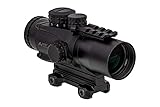
- New Ruggedized Mount provides exceptional clamping power
- Includes height riser
- ACSS 300 BLK/7.62×39 chevron reticle has BDC and ranging out to 600 yards with supersonic 7.62x39mm or 300 Blackout ammo and 225 yards with subsonic
ACOG TA33 3×30: Military-grade durability with tritium illumination, but costs three times as much. Overkill for most hunting applications.
Burris AR-332 3×32: Comparable features at a similar price point. The Burris offers good value but doesn’t match Vortex’s optical quality or warranty support. Check Price
Bottom Line for Hunters
After 16 months of serious field use, the Vortex Spitfire 3x has proven itself as a practical choice for hunters who value simplicity and reliability. While it may not offer the magnification range of variable power scopes, it delivers consistent performance without the complexity.
Choose this scope if:
- You want to eliminate magnification adjustment variables
- Your hunting typically involves shots from 50-300 yards
- You value ruggedness and reliability over maximum features
- You appreciate the backup security of an etched reticle
Consider alternatives if:
- You frequently need shots beyond 300 yards requiring higher magnification
- You prefer the flexibility of variable power optics
- Weight is a critical factor for your hunting style
- You need maximum eye relief for heavy recoiling rifles
The Spitfire 3x represents practical thinking in optics design. It’s not the most advanced scope available, but it’s earned its place through reliable performance in challenging conditions. Remember, your best survival tool is the six inches between your ears – this scope just helps you see your target clearly without unnecessary complications.
As my grandfather used to say, “The best equipment is simple equipment that works every time.” This scope embodies that reliability while delivering modern optical performance.
Frequently Asked Questions
Is fixed magnification limiting for varied hunting scenarios? Initially, I thought it might be, but 3x covers the vast majority of hunting situations effectively. You learn to work within the scope’s capabilities rather than constantly adjusting magnification. For most hunters, 3x provides adequate detail for ethical shots from timber hunting to moderate long-range opportunities.
How does the etched reticle perform without illumination? Excellent. The glass-etched reticle remains clearly visible in all lighting conditions where you’d ethically take game. This backup feature has proven valuable during extended expeditions where battery conservation matters. The reticle contrast is sufficient for precise aiming even without illumination.
Will this scope handle magnum cartridge recoil? I’ve used it successfully on .308 Winchester without issues. For true magnums (.300 Win Mag, .338 Lapua), the shorter eye relief becomes more critical. The scope should handle the recoil mechanically, but proper mounting and stock fit are essential for shooter comfort and safety.
How does the prism design affect durability compared to traditional scopes? The prism construction is inherently more rugged than traditional scopes with multiple moving lens elements. The compact design reduces stress points and leverage forces that can affect zero retention. In my experience, it’s survived impacts that might damage conventional optics.
Is the illumination system reliable in extreme conditions? Very reliable in my experience down to -15°F. The electronics continue functioning in cold conditions where some optics fail. The dual-color system provides options for different backgrounds and lighting conditions. Battery life meets advertised specifications in real-world use.
Continue building your hunting expertise with our comprehensive guides on rifle setup, ballistics fundamentals, and wilderness hunting strategies. Remember, equipment should enhance your skills, not replace them – practice regularly with your chosen optics.