The day I watched a $3,000 European scope fail spectacularly during a rainstorm while my student’s Vortex Venom kept running perfectly, I started reconsidering my assumptions about “budget” optics. That humbling experience led me to buy my own Venom 3-15×44, mounting it on my Winchester Model 70 in .270 Winchester for what I assumed would be a short evaluation. Three seasons and approximately 2,500 rounds later, it’s still there, having earned its place through performance rather than pedigree.
I’ll admit to being skeptical initially. Vortex’s Venom line sits below their Viper series, which already competes at a lower price point than premium glass. In my experience, there’s usually a reason budget optics cost less – corners cut in construction, glass quality, or reliability. But after putting this scope through Montana hunting seasons, summer varmint shoots, and enough drops to make me wince, I’ve learned the Venom cuts corners in surprisingly smart places.
The 3-15×44 configuration hits a sweet spot for western hunting and long-range shooting without breaking the bank. At around $650 street price, it competes against scopes costing twice as much. Whether it deserves to compete is what I’ve spent three years discovering, one shot at a time.

- Ruggedly built on a 30mm tube, the Viper HD 3-15×44 features a 5x optical design and an illuminated second focal plane reticle. The fast-focus eyepiece easily adjusts the reticle focus and the side parallax knob allows quick and easy adjustments.
Understanding the Venom’s Market Position
Vortex positioned the Venom series as their entry into serious long-range optics – not bottom-shelf garbage, but not premium either. It’s aimed at hunters and shooters who need capability beyond basic scopes but can’t justify Razor HD prices. Think of it as the working man’s precision scope – functional over fancy.
The 34mm main tube immediately signals serious intent. This isn’t a dressed-up hunting scope; it’s built for dialing elevation at distance. The larger tube provides more adjustment range and theoretically better light transmission, though at the cost of weight and requiring specific rings. My grandfather would have scoffed at the size, but he never shot past 300 yards either.
At 28.8 ounces, it’s porky for a hunting scope. Add quality rings and you’re over two pounds of glass on your rifle. For dedicated long-range rigs or truck guns, this is acceptable. For mountain hunting where ounces matter, you’ll feel every bit of that weight by day three. Choose your application accordingly.
Glass Quality: Better Than Expected
The first surprise came during initial sight-in. The glass clarity exceeded my expectations completely. No, it won’t match my Swarovski spotter, but for a sub-$700 scope, the image quality impresses. Colors render naturally without the blue tint common in budget glass. Edge sharpness stays acceptable throughout most of the magnification range.
During a September elk hunt, I spent hours glassing hillsides through the Venom. At 12x, I could clearly identify bulls from cows at 800 yards, count points, and judge body condition. The scope gathered enough light during legal shooting hours to maintain target clarity from dawn to dusk. That’s all most hunters actually need.
Chromatic aberration shows slightly at maximum magnification, particularly on high-contrast targets. Looking at a black target against snow at 15x, you’ll see purple fringing at the edges. For practical shooting, this is irrelevant. If you’re using chromatic aberration to judge shot placement, you’re overthinking it.
The coatings Vortex uses (they call it XD – Extra-low Dispersion glass) work effectively. Flare resistance impresses, even when shooting toward the sun during late afternoon. The scope handles backlighting better than some costing twice as much.
First Focal Plane: The Right Choice
The Venom uses first focal plane (FFP) construction, meaning the reticle scales with magnification. This keeps your holdovers accurate whether you’re at 3x or 15x – crucial for practical field shooting where you might not have time to dial to a specific magnification.
During a prairie dog shoot last June, the FFP design proved its worth repeatedly. Close shots at 100 yards on 3x, medium shots at 300 yards on 8x, and long bombs at 500+ yards on 15x – the reticle subtensions stayed accurate throughout. No mental math, no remembering which magnification makes the reticle true. Just hold and shoot.
The downside: at 3x, the reticle becomes quite fine. In thick timber or low light, picking up the center crosshair can be challenging without illumination. This isn’t ideal for close-range hunting where quick acquisition matters. But for the scope’s intended use – longer-range precision – FFP makes sense.
The EBR-7C Reticle: Practical Simplicity
Vortex offers the Venom with their EBR-7C reticle in either MOA or MRAD. I chose MOA because I think in inches and yards, not centimeters and meters. The reticle provides a clean center cross with hash marks for windage and elevation holds.
The design stays uncluttered – no Christmas tree of dots and dashes confusing the sight picture. You get what you need for holdovers and wind calls without excessive complexity. Each hash represents 2 MOA at center magnification, with finer 1 MOA marks for precision holds. Simple, functional, effective.
With my .270 zeroed at 200 yards, the hash marks provide reasonably accurate holds to 600 yards with standard 130-grain loads. Are they perfect for every load and condition? No. Do they work for minute-of-deer accuracy in field conditions? Absolutely.
The illumination disappoints slightly. While functional, it’s not daylight bright and offers limited adjustment range. In most conditions, I run it off. For dawn/dusk hunting, the lower settings help, but this isn’t a selling point of the scope.
Turret Performance: Surprisingly Good
The exposed elevation turret with capped windage represents smart design for hunting applications. You’ll dial elevation for longer shots but typically hold for wind. The turret clicks are positive and audible – you know exactly what you’ve dialed without looking.
Each click moves impact 1/4 MOA, with 20 MOA per revolution. The RevStop zero system provides a hard stop at your zero, preventing confusion about where you are in the adjustment range. After dialing for a long shot, returning to zero is positive and foolproof.
Tracking tested excellent through box drills and tall target tests. Dial 20 MOA up, and impact moves exactly 20 MOA. The scope returns to zero reliably after adjustment. This mechanical precision matches scopes costing significantly more.
The only complaint: the turret markings could be larger. In low light or with aging eyes, reading the numbers requires effort. A minor issue, but worth noting for those with vision challenges.
Parallax Adjustment: From 10 Yards to Infinity
The side focus parallax adjustment works from 10 yards to infinity, with accurate markings throughout. At marked distances, parallax eliminates completely. The adjustment knob turns smoothly without being loose, staying where set even under recoil.
For a hunting scope, the 10-yard minimum is surprisingly useful. I’ve used it for precise rimfire practice and even some air rifle work. The infinity setting works well beyond 800 yards, covering any practical shooting distance.
The larger adjustment knob makes operation easy with gloves. During late-season hunts with numb fingers, I could still adjust parallax effectively. Small details like this matter more than spec sheets suggest.
Durability Testing: Three Years of Use
Beyond formal testing, this scope has endured:
- Three Montana hunting seasons (rain, snow, dust)
- Summer varmint shooting in 100°F heat
- Winter coyote hunting at -25°F
- Multiple drops from various heights
- Constant truck vibration on rough roads
- Approximately 2,500 rounds of .270 Winchester
- Loan to nephew (survived somehow)
Zero retention has been perfect. The scope returns to zero after each adventure without fail. The aluminum housing shows honest wear – scratches and dings from real use – but no functional damage. The glass remains clear despite minimal babying.
Most impressive: every mechanical function still works perfectly. Turrets track accurately, parallax adjusts smoothly, magnification changes without binding. This isn’t just surviving; it’s maintaining full functionality despite abuse.
Field Performance: Real-World Results
During three seasons of use, the Venom has contributed to:
- Multiple whitetail deer (75-350 yards)
- Two mule deer (280 and 420 yards)
- One elk (310 yards)
- Countless coyotes (50-500 yards)
- Hundreds of prairie dogs and ground squirrels
Every animal taken represented a first-round hit with proper shot placement. The scope’s reliability and predictability built confidence for longer shots I might have passed with lesser glass.
Most memorable was a 420-yard shot on a mule deer buck during howling wind. Using the reticle for wind holds rather than dialing, I made a perfect heart shot. The FFP reticle and clear glass made a difficult shot routine.
Weight and Balance: The Trade-Off
At nearly two pounds with rings, the Venom affects rifle balance noticeably. On my Winchester Model 70, it makes the rifle slightly top-heavy. For bench shooting or from a bipod, this doesn’t matter. For offhand shooting or extended carries, you’ll notice it.
I’ve found the weight actually helps with stability when shooting from field positions. The extra mass dampens minor movements, making it easier to stay on target. But after a full day of mountain hunting, that weight becomes tiresome.
For dedicated long-range rifles or situations where you’re not hiking far, the weight is acceptable. For backcountry hunting where every ounce counts, lighter options exist – though they’ll cost significantly more for similar features.
Compared to the Competition
Versus Vortex Viper PST Gen II 3-15×44:

- The Viper PST Gen II takes incredible performance and rock solid features to new heights. The 3-15×44 first focal plane riflescope is incredibly versatile and ideal for close to long range scenarios.
The PST offers slightly better glass and more refined turrets for about $400 more. Unless you need the absolute best Vortex offers in this range, the Venom provides 90% of the performance for significantly less money.
Versus Leupold VX-5HD 3-15×44:
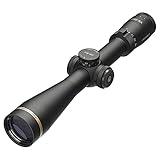
- Model #172368 – VX-5HD 3-15×44 Riflescope with an Illuminated FireDot Duplex Reticle, CDS-ZL2 and a Matte finish
The Leupold weighs less with superior glass clarity, but costs nearly double. For mountain hunting where weight matters, the Leupold wins. For everything else, the Venom’s value is hard to beat.
Versus Athlon Ares BTR Gen 2 2.5-15×50:

- Advanced Fully Multicoated optics effectively reduces reflected light and increases the transmission of light giving you a brighter image than normal single coated lenses
Similar price point with comparable features. The Athlon offers a wider magnification range and larger objective, but the Venom has better warranty support and dealer network. Personal preference determines the winner.
Versus Primary Arms GLx 3-18×44: The PA offers more magnification and excellent value, but uncertain long-term support and limited track record. The Venom’s established reliability and Vortex’s warranty give it the edge for serious use.
Living with the Venom: Daily Reality
The scope lives on my .270 Winchester, primarily used for deer hunting and summer varmint control. It holds zero regardless of temperature swings or rough handling. The repeatability gives confidence for dialing shots at distance.
Maintenance involves basic cleaning with proper tools. The external lenses clean easily with a lens pen. No special treatment required – just the care any quality optic deserves. After three years, it still looks and performs like new.
Vortex’s VIP warranty provides peace of mind. While I haven’t needed it, knowing they’ll repair or replace the scope regardless of cause adds value. Their customer service reputation among hunters I trust is universally positive.
Who Should Buy This Scope?
Perfect for:
- Long-range shooters on a budget
- Hunters taking shots beyond 300 yards
- Tactical rifle competitors starting out
- Anyone wanting FFP features affordably
- Shooters building precision rifles economically
Look elsewhere if:
- Weight is critical for mountain hunting
- You need the absolute best glass available
- Maximum magnification above 15x is required
- Close-range hunting is primary use
- Budget allows for premium options
Training and Practice Considerations
The Venom’s features require understanding to maximize. Spend time learning the reticle subtensions for your specific loads. Document holds at various distances for quick reference.
Practice with the FFP reticle at different magnifications. Understanding how to use it effectively at 6x versus 15x expands your shooting envelope considerably.
The RevStop zero system needs proper setup initially. Follow instructions carefully to ensure positive return to zero. Once set correctly, it becomes invaluable for field use.
The Bottom Line: Value That Surprises
The Vortex Venom 3-15×44 delivers remarkable performance for its price point. It’s not perfect – the weight bothers some, the illumination underwhelms, and the eye box tightens at maximum magnification. But for practical long-range shooting and hunting, these compromises are acceptable given the value proposition.
After three years of hard use, I trust this scope completely. It’s proven that “budget” doesn’t automatically mean “compromise” when manufacturers make smart decisions about where to save money. The Venom saves on fancy features while delivering on fundamentals – clear glass, accurate tracking, and proven durability.
For shooters wanting to stretch their effective range without stretching their budget to breaking, the Venom makes sense. It provides genuine long-range capability at a price that leaves money for ammunition, training, and other gear. Sometimes that’s exactly what you need.
The wilderness doesn’t care what you paid for your scope. It only tests whether your equipment works when opportunities present themselves. The Vortex Venom 3-15×44 has passed every test Montana has thrown at it, proving that value and performance aren’t mutually exclusive.
Practice makes permanent, so practice it right. Good glass helps, but trigger time matters more.
Looking for more honest optics reviews and practical hunting wisdom? Check out our complete collection of gear guides and field-tested content at Moosir.com. Remember – respect the game, respect the land, respect yourself.