Two summers back, I watched a competitive shooter friend burn through $4,000 worth of premium European glass trying to find the “perfect” long-range scope. Meanwhile, I was ringing steel at 1,200 yards with a Vortex Venom that cost less than his scope rings. Sometimes the best tool isn’t the most expensive one – it’s the one that shows up and does the work without drama or excuses.
The Vortex Venom 5-25×56 represents something important in the precision rifle world: competent long-range capability that doesn’t require a second mortgage. After three years of prairie dog towns, steel matches, and one memorable elk hunt at 627 yards, I can tell you exactly what this scope delivers and where it comes up short.
The Long-Range Reality Check
During my eight years as an Army Ranger, we had a saying: “Perfect is the enemy of good enough.” That philosophy applies directly to precision rifle scopes. You can spend $3,000 chasing that last 5% of optical perfection, or you can spend $800 on something that handles 95% of real-world shooting scenarios. The Venom sits firmly in that second category, and that’s not an insult.
Let me share what three years and roughly 8,000 rounds have taught me about this particular piece of Wisconsin-made glass.
Understanding the Vortex Venom Platform
Specifications That Actually Matter
Core Numbers:
- Magnification: 5-25x (5:1 zoom ratio)
- Objective: 56mm
- Tube: 34mm diameter
- Eye Relief: 3.6-4.0 inches
- Length: 15.3 inches
- Weight: 35 ounces (2.2 pounds)
- Field of View: 21.2 feet at 5x, 4.7 feet at 25x (at 100 yards)
- Elevation Travel: 85 MOA (25 MRAD)
- Click Value: 0.25 MOA or 0.1 MRAD
- Reticle: EBR-7C (First Focal Plane)
- Zero Stop: RevStop system
- Construction: Single-piece aluminum tube
Those numbers paint a picture of a scope built for serious distance work without serious pretension.
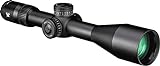
- The Venom 5-25×56 First Focal Plane (MOA) riflescope is built for long-range and competition with a 5-25x mag range built into a 34mm tube for a massive amount of turret travel (85 MOA max elevation/windage).
Three Years of Montana Testing
Primary Test Platforms
The Venom has lived on three different rifles:
- Tikka T3x TAC A1 in 6.5 Creedmoor – Primary long-range rig
- Savage 110 Tactical in .308 – Training and backup rifle
- Ruger Precision Rimfire – Skills development and prairie dogs
Each platform revealed different aspects of the scope’s personality.
Optical Performance: Clear Enough to Matter
Let’s address the elephant in the scope ring: No, this isn’t Swarovski glass. It’s not even Vortex Razor glass. But here’s what matters – at 800 yards, I can clearly see .308 holes in white paper. At 1,000 yards, I can spot impacts on steel. At 400 yards, I can count points on a mule deer.
The glass quality sits somewhere between “good enough” and “surprisingly good.” There’s minimal chromatic aberration (color fringing) until you hit maximum magnification. Edge clarity degrades in the outer 10% of the sight picture, but your reticle lives in the center where clarity is excellent.
During a prairie dog hunt last May, I spent three days behind this scope in bright sun, heat mirage, and dust. The glass never fatigued my eyes, never lost contrast in harsh light, and always showed me what I needed to see. That’s practical performance that matters more than laboratory measurements.
The EBR-7C Reticle: Busy But Useful
First Focal Plane (FFP) means the reticle grows and shrinks with magnification, keeping subtensions accurate at any power. The EBR-7C reticle looks like someone threw a protractor at a Christmas tree, but once you understand it, the system works.
The center crosshairs are thin enough for precision without disappearing in low light. The hash marks provide holds for wind and elevation without cluttering the primary aiming point. At 5x, the reticle is usable but small. At 25x, it’s perfect for precision work.
I’ve used this reticle to hold for 15 mph crosswinds at 600 yards and walk shots onto steel at 1,200 yards. It’s not as clean as a simple crosshair, but it’s far more useful when you need to make quick corrections without dialing.
Tracking and Turrets: Where Budget Shows
The turrets track accurately – that’s the good news. In box tests and tall target tests, the Venom returns to zero reliably and adjustments are consistent. I can dial 20 MOA up, shoot, dial back down, and impact at my original zero every time.
But the turrets feel… budget. The clicks are positive but not crisp. There’s a sponginess that premium scopes don’t have. The RevStop zero system works but lacks the positive lock of higher-end alternatives. It’s like comparing a Toyota Corolla to a BMW – both get you there, but one feels better doing it.
During a PRS-style match, I ran the turrets hard – constant dialing between 3 and 15 MOA for various distances. They never failed, never slipped, never lost zero. But by day’s end, my fingers were sore from the effort required to turn them quickly. The included throw lever helps with magnification changes, but the turrets could use their own leverage enhancement.
Parallax: The Achilles Heel
Here’s the Venom’s biggest weakness: parallax adjustment accuracy. The markings on the parallax knob are suggestions, not promises. When the knob says 300 yards, actual parallax-free distance might be 250 or 350 yards.
This isn’t a deal-breaker – you learn to adjust parallax by looking through the scope, not at the markings. Move your head slightly while looking at the target; adjust until the reticle doesn’t shift. It becomes second nature, but it’s an annoyance that shouldn’t exist at this price point.
Durability: Wisconsin Tough
Three years of hard use have proven the Venom’s toughness:
- Survived a tumble down a shale slope (rifle and scope)
- Endured -30°F to 100°F temperature swings
- Handled approximately 8,000 rounds including hot .308 loads
- Stayed waterproof through multiple stream crossings
- Maintained zero through rough truck rides on ranch roads
The only visible wear is slight ring marks and minor finish wear on the turret edges. Internally, it’s still perfect. The nitrogen purging works – no fogging even during rapid temperature changes that challenge lesser scopes.
Vortex’s lifetime warranty means something too. A friend destroyed his Venom in a vehicle accident (scope was least of his worries). Vortex replaced it no questions asked. That’s peace of mind worth considering.
Real-World Performance
Long-Range Steel
At my local 1,000-yard range, the Venom is more than adequate. With good ammunition and solid fundamentals, first-round hits on 12-inch plates are routine. The magnification range covers everything from load development at 100 yards to spotting impacts at maximum distance.
The 25x top end provides enough magnification to see bullet trace in the right conditions. That visual feedback accelerates learning and helps diagnose missed shots. At 5x, the wide field of view helps spot impacts when shooting without a spotter.
Hunting Applications
Last September, I took a mature bull elk at 627 yards using the Venom. In fading light, I could clearly identify the bull, confirm the shot angle, and place the crosshairs precisely behind the shoulder. The scope did its job without drama.
The weight (35 ounces) makes this a dedicated long-range hunting scope, not an all-around mountain rifle option. On my Tikka, it balances well but adds noticeable weight for carrying. For spot-and-stalk western hunting where shots might stretch past 400 yards, it’s perfect. For timber hunting, it’s overkill.
Prairie Dog Precision
On prairie dog towns, the Venom shines. The magnification range lets you spot dogs at distance, then zoom in for precise shots. The reticle subtensions work for quick holds on small targets. The clarity is sufficient to spot hits and misses on tiny targets.
During a three-day shoot last spring, I fired approximately 800 rounds through a .223 wearing the Venom. It handled the high-volume shooting without any shift in zero or degradation in performance. That’s reliability that builds confidence.
Competition Use
In local PRS-style matches, the Venom is competitive but not optimal. It lacks the tool-less turret reset, advanced reticles, and ultra-precise tracking of dedicated competition scopes. But for club-level matches, it’s absolutely adequate.
I’ve placed in the top third running the Venom against much more expensive glass. The limitation is more often the shooter than the scope. For someone entering precision rifle competition, the Venom offers enough capability to learn and grow without immediate equipment limitations.
Compared to the Competition
Versus Arken EP5 5-25×56
The Arken offers similar features plus illumination for less money. Turrets feel better, weight is similar, glass is comparable. For pure value, the Arken wins. But Vortex’s warranty and customer service tip the scales back toward the Venom for many shooters.

- Arken Products are designed to combine quality, performance and precision with tremendous value. The EP5 5-25X56mm riflescope is incredibly versatile ideal for hunting and shooting training.
Versus Vortex Viper PST Gen II 5-25×50
Step up to the Viper PST Gen II and you get better glass, illumination, and improved turrets. For serious competition or professional use, yes. For recreational shooting and hunting, the Venom is sufficient.
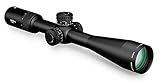
- The Viper PST Gen II takes incredible performance and rock solid features to new heights. The 5-25×50 first focal plane riflescope is incredibly versatile and ideal for close to long range scenarios.
Versus Athlon Ares ETR 4.5-30×56
The Athlon offers more magnification range, better turrets, and comparable glass. But it’s also heavier and more expensive. The Athlon is the better scope; the Venom is the better value.

- 0.1 MIL Click Value, 32 MIL Total Elevation Adjustment, 25 Yard to Infinity Parallax Adjustment, 6 Illumination Settings.
- First focal plane reticle stays valid at all power settings allowing you to fully utilize the specially designed reticle that shrinks or grows along with your target as you zoom in or out.
Versus Nightforce ATACR 5-25×56
Different league entirely. The Nightforce is superior in every measurable way. But it costs three times as much. Unless you’re a professional shooter or have unlimited budget, the performance difference doesn’t justify the price difference for most users.

- EXCEPTIONAL OPTICAL PERFORMANCE – The Nightforce ATACR – 5-25x56mm F1 hunting scope features top-tier ED glass, providing outstanding optical clarity and brightness. This ensures sharp, vivid images, even in challenging lighting conditions, enabling precise target identification and engagement
Living With the Venom
What Works Well
- Glass clarity sufficient for any practical shooting
- Reliable tracking and return to zero
- Excellent warranty and customer service
- RevStop zero system, while basic, functions well
- Included throw lever and sunshade
- Price-to-performance ratio
What Needs Improvement
- Parallax adjustment accuracy
- Turret feel could be more refined
- Weight might deter some users
- No illumination option
- Rubber bikini lens covers instead of flip-caps
Practical Workarounds
Every scope has compromises. The Venom’s are manageable:
- Ignore parallax markings, adjust by eye
- Add aftermarket turret levers for faster adjustment
- Upgrade to flip-up lens covers immediately
- Accept the weight or hit the gym
- Learn to work without illumination
The Investment Analysis
At $700-900, the Venom offers tremendous value:
- Entry into serious long-range shooting
- Lifetime warranty protection
- Proven track record
- Sufficient quality for most applications
- Room to grow as skills develop
Compare that to $2,500+ for premium options that offer maybe 20% more performance, and the math becomes clear. For recreational shooters and hunters, the Venom makes sense.
Field Intelligence Summary
Who Should Buy This
- Hunters taking shots past 400 yards
- New long-range shooters learning the discipline
- Prairie dog and varmint shooters
- Budget-conscious precision rifle competitors
- Anyone needing reliable long-range capability without premium pricing
Who Should Look Elsewhere
- Professional precision rifle competitors
- Military/LE snipers
- Unlimited budget shooters
- Weight-conscious mountain hunters
- Those requiring illuminated reticles
The Bottom Line
The Vortex Venom 5-25×56 is the scope equivalent of a trustworthy ranch truck – not fancy, not perfect, but absolutely reliable and capable of real work. It bridges the gap between entry-level and professional-grade optics, offering sufficient quality for 95% of shooters at 30% of premium prices.
After three years and thousands of rounds, mine continues to perform without drama. It’s taken elk, rung steel at four-digit distances, and taught me more about long-range shooting than any piece of equipment should. That’s value that transcends specifications.
Your best survival tool is the six inches between your ears, but those six inches need quality glass to reach past 500 yards effectively. The Venom provides that capability without requiring you to sell the truck to afford it.
Final Assessment
The Venom isn’t the best long-range scope available, but it might be the smartest purchase for most shooters. It offers enough quality to grow with your skills, backed by a warranty that means something. The minor frustrations (parallax adjustment, turret feel) are manageable, while the core performance is rock-solid.
Practice makes permanent, and you can afford more practice ammunition when you don’t blow the budget on glass. The Venom lets you invest in both equipment and training.
The wilderness doesn’t care about your scope’s pedigree, only whether you can make the shot when it counts. The Venom has proven it can, repeatedly, in conditions that matter.
Plan for the worst, hope for the best, and remember – hits count more than hardware.
Want more honest long-range optics reviews? Visit Moosir.com where we test gear at actual distances, not just on paper. Because knowing your equipment’s real capabilities beats believing marketing claims every time.