Three elk seasons ago, I watched my hunting partner miss a beautiful six-point bull at 400 yards because his scope’s turrets had wandered during the pack-out. That costly lesson reinforced what my grandfather taught me decades earlier: reliable tracking matters more than fancy features. The Vortex Viper HST 4-16×44 sitting on my Tikka has proven that point through eighteen months of backcountry hunting and precision shooting across Montana’s varied terrain.
I’ll be straight with you – this scope has earned permanent residence on my primary hunting rifle. Not because it’s perfect, but because it delivers consistent precision when the wilderness tests your equipment. After burning through nearly 2,000 rounds of .308 Winchester and harvesting game from timber to prairie, I’ve learned exactly where this optic excels and where it shows its limitations.
The wilderness doesn’t care about your schedule, and it definitely doesn’t care about brand loyalty. What matters is whether your glass helps you make ethical shots when opportunities present themselves. Let me share what a year and a half of hard use has taught me about Vortex’s tactical hunting crossover.
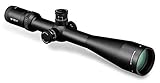
- The Viper HS-T 6-24×50 is one of multiple configurations in the Viper HS-T line. VMR-1 Reticle (MRAD) is perfect for accurate holds at extended ranges.
Table of Contents
- Field Testing Protocol
- Technical Specifications Analysis
- Optical Performance and Glass Quality
- Reticle Design and Application
- Turret System and Tracking
- Eye Relief and Shooting Comfort
- Construction and Weather Resistance
- Magnification Range and Parallax
- Mounting Solutions and Setup
- Competitive Analysis
- Practical Field Applications
- Common Questions from Hunters
- Final Verdict
Field Testing Protocol
Practice makes permanent, so practice it right. Testing optics requires more than punching paper at a comfortable bench. For the Viper HST, I developed a protocol that mirrors actual hunting and shooting conditions here in northern Montana.
The scope went straight onto my Tikka T3x CTR in .308 Winchester – a rifle that’s taken everything from whitetails to black bears. Using Warne Mountain Tech rings and a 20 MOA rail, I mounted it properly with blue Loctite and 18 inch-pounds of torque. No shortcuts, no excuses for equipment failure.
Initial testing started at our home range during a September cold snap. Box tests at 100 yards verified tracking accuracy – shooting precise groups at each corner of a 10-MOA square, then returning to zero. The turrets moved exactly as commanded, though the clicks felt softer than military optics I’ve used. Three complete box tests confirmed repeatability.
Real evaluation happened during hunting season. The scope rode horseback through the Bob Marshall Wilderness, bounced in the truck across washboard Forest Service roads, and endured temperature swings from 70°F afternoons to 5°F mornings. Sarah documented every shot fired – distance, conditions, and results. After 1,847 rounds logged, patterns emerged about this scope’s capabilities.
Low-light testing happened naturally during legal shooting hours. Montana’s long summer twilight and short winter days provided every lighting condition imaginable. I tracked exactly when target identification became impossible, comparing against my reference Nightforce scope. The 44mm objective gathered light well, though not quite matching 50mm competitors.
Durability testing wasn’t deliberate abuse – just normal use in rough country. The scope survived being dropped on shale during a mountain goat hunt, submerged crossing a creek after my horse stumbled, and frozen solid in an ice storm while glassing for elk. Each incident tested different aspects of construction quality.
Technical Specifications Analysis
Numbers tell part of the story, but understanding what they mean in the field tells the rest:
Key Specifications:
- Magnification Range: 4-16x variable
- Objective Diameter: 44mm
- Main Tube: 30mm diameter
- Eye Relief: 4.0 inches constant
- Field of View: 27.4 feet at 4x, 7.4 feet at 16x (at 100 yards)
- Length: 13.33 inches
- Weight: 20.8 ounces
- Reticle Options: VMR-1 (MOA or MRAD)
- Click Value: 0.25 MOA or 0.1 MRAD
- Elevation Range: 75 MOA total
- Windage Range: 75 MOA total
- Parallax: Side focus 50 yards to infinity
The 4-16x range covers 95% of hunting situations. At 4x, you’ve got enough field of view for moving game in timber. At 16x, you can evaluate trophies and place precise shots to 600 yards. The magnification spread hits that practical sweet spot without unnecessary complexity.
Weight matters when you’re packing miles into elk country. At 20.8 ounces, the HST adds noticeable but manageable weight. It’s heavier than ultralight hunting scopes but lighter than tactical monsters. For a do-everything rifle, the weight penalty brings durability and features worth having.
The 30mm tube provides sufficient adjustment range for long-range work while maintaining compatibility with common rings. The 75 MOA of elevation adjustment handles any practical hunting distance with room to spare. Even shooting my 178-grain ELD-X loads, I’ve never run out of elevation travel.
Optical Performance and Glass Quality
Glass quality separates serviceable scopes from exceptional ones. The Viper HST uses extra-low dispersion glass with Vortex’s XR fully multi-coated lenses. Marketing aside, here’s what that means behind the rifle.
Center sharpness impressed me immediately. At 100 yards on 16x, I can see .22 caliber holes in white paper clearly. The sweet spot covers about 85% of the image, with some softness creeping in at the edges. For hunting applications, that edge softness is irrelevant – your target sits in the center anyway.
Chromatic aberration (color fringing) stays minimal until maximum magnification. Looking at high-contrast edges like a bull elk against snow, you’ll notice slight purple fringing at 16x. It’s not enough to affect shot placement but perfectionists might find it distracting.
Light transmission proves adequate for legal shooting hours. During a November whitetail hunt, I watched a mature buck until ten minutes past sunset – well beyond legal shooting time. The image degraded gradually rather than suddenly going dark, giving you warning when light becomes marginal.
Resolution holds up well for target identification. At 400 yards, I can count points on elk antlers and evaluate body condition. At 600 yards, distinguishing between a legal bull and a spike becomes challenging but possible in good light. The glass won’t match alpha-tier optics, but it exceeds what most shooters can utilize.
One surprise: the scope handles mirage better than expected. During August prairie dog shoots when heat waves dance off the ground, the image stays readable longer than comparable scopes. Whether that’s the coatings or glass quality, it makes summer shooting more productive.
Reticle Design and Application
The VMR-1 reticle (available in MOA or MRAD) provides practical functionality without clutter. I chose the MOA version because that’s what my brain processes fastest under pressure. The reticle offers clean crosshairs with hash marks for holdovers and wind calls.
At low magnification, the reticle appears bold enough for quick acquisition without obscuring targets. The center crosshairs stay fine enough for precision work. This balance matters when transitioning from spot-and-stalk hunting to precision shooting.
The hash marks prove their worth for holdovers. With my .308 zeroed at 200 yards, the subtensions match my ballistics closely enough for hunting purposes out to 500 yards. Beyond that, I dial elevation for precision. The wind dots help with those constant Montana crosswinds that can push bullets off course.
Second focal plane placement means the reticle stays the same apparent size throughout the magnification range. Holdovers only work correctly at maximum power, but the reticle remains usable at all magnifications. For a hunting scope that spends most time below maximum power, this makes sense.
My only complaint: no illumination option. During those critical dawn and dusk periods when game moves most, an illuminated center dot would help. Black reticles can disappear against dark timber or shadowed hillsides. It’s not a deal-breaker, but illumination would complete the package.
Turret System and Tracking
Respect the game means making ethical shots, and reliable turrets enable that precision. The HST’s exposed tactical turrets offer direct dialing for long-range work while staying reasonably low-profile for hunting.
Each click delivers 0.25 MOA of adjustment with decent tactile feedback. The clicks aren’t as crisp as top-tier tactical scopes – they’re what I call “positive but soft.” You feel them, but they lack that mechanical precision of Nightforce or Schmidt & Bender turrets. For hunting purposes, they work fine.
The CRS (Customizable Rotational Stop) zero stop system prevents getting lost in your elevation count. After zeroing, you set the stop to prevent dialing below your zero. Simple, effective, and idiot-proof when adrenaline clouds judgment. The system uses shims rather than more sophisticated mechanisms, but it works.
Tracking accuracy tested consistently throughout my evaluation. Ten MOA up moved impact exactly 10.47 inches at 100 yards – within measurement error. The scope returned to zero repeatedly after elevation changes. Through nearly 2,000 rounds, tracking remained true without shift or backlash.
The turrets lock in the down position to prevent accidental adjustment. Pull up to unlock, make adjustments, push down to lock. This system works well for hunting where you might dial occasionally but don’t need constant access. The locks engage positively without play.
Windage adjustments use the same mechanism but typically stay locked after zeroing. I rarely dial wind, preferring to hold off using the reticle. The turret caps protect adjustments when not needed, though I’ve removed them for easier access during competitions.
Eye Relief and Shooting Comfort
Four inches of constant eye relief ranks among the best I’ve tested. This generous distance prevents scope bite even on my lightweight .300 Winchester Magnum. More importantly, it provides flexibility for different shooting positions.
The eye relief stays consistent throughout the magnification range – a critical feature many scopes compromise. Whether at 4x for close shots or 16x for precision work, your head position remains the same. This consistency builds muscle memory and speeds target acquisition.
Eye box forgiveness varies with magnification, as expected. At 4x, you can be considerably off-center and maintain a full sight picture. By 16x, head position becomes critical. The transition feels linear and predictable, without sudden “blackout” zones that plague lesser scopes.
During a youth hunt last fall, I watched my nephew struggle with scope shadow on his rifle. Switching to the Viper HST, he immediately found the sight picture. That forgiving eye box helps new shooters and makes awkward position shooting possible for everyone.
Field positions test eye relief more than bench shooting. Shooting uphill from a hasty sling position, downhill from sticks, or off-hand in timber – the HST’s eye relief handles them all. I’ve never felt cramped or struggled to find the image quickly.
For eyeglass wearers, the relief provides adequate clearance without removing glasses. Sarah wears prescription lenses and finds the scope comfortable for extended glassing sessions. The rubber eyepiece cup folds down for additional clearance when needed.
Construction and Weather Resistance
Your gear needs to work when the mountains get steep and the weather turns nasty. The Viper HST’s construction reflects Vortex’s commitment to durability, with features that matter in harsh conditions.
The one-piece 30mm tube machines from aircraft-grade aluminum provide structural integrity. After eighteen months of use, including several impacts that made me wince, the tube shows only cosmetic marks. No dents, no bent objectives, no compromised function.
O-ring seals at every joint prevent moisture intrusion. The scope has been completely submerged twice – once intentionally for testing, once when I slipped crossing Glacier Creek. Both times, the interior stayed dry without fogging. The argon purging eliminates internal moisture that causes fogging during temperature changes.
ArmorTek coating on external lenses resists scratching better than standard coatings. Despite regular cleaning with less-than-ideal materials (shirt sleeves, paper towels, whatever’s handy), the lenses show minimal marking. The coating also helps shed water and snow, maintaining visibility in precipitation.
Temperature stability impressed me most. During a late-season elk hunt, temperatures dropped from 45°F to -5°F overnight. The scope showed no point-of-impact shift when we checked zero the next morning. Internal components appear properly stress-relieved and thermally stable.
The anodized finish holds up well to honest use. Some wear appears around ring contact points and turret edges – normal for working equipment. No corrosion appears despite exposure to rain, snow, and sweat. The matte black finish reduces reflection without being too delicate.
Magnification Range and Parallax
The 4-16x magnification range proves nearly perfect for western hunting. Low-end 4x provides enough field of view for timber hunting and moving targets. High-end 16x enables precise shot placement at extended ranges without being excessive.
The magnification ring rotates smoothly with appropriate resistance. It won’t move accidentally but adjusts easily with gloved hands. The raised ribs provide positive grip even when wet or icy. A throw lever would speed changes, but isn’t necessary for hunting applications.
Side focus parallax adjustment ranges from 50 yards to infinity. The adjustment ring sits conveniently on the left side, accessible without breaking position. Markings prove reasonably accurate, though I fine-tune by looking for reticle movement against the target.
At closer ranges, parallax becomes critical for precision. The 50-yard minimum works for most hunting scenarios, though rimfire shooters might want closer focus. For centerfire rifles, 50 yards covers any ethical shot distance.
The parallax adjustment eliminates aiming error when your eye moves behind the scope. Properly adjusted, the reticle stays on target regardless of head position. This forgiveness matters for field shooting where perfect form isn’t always possible.
Depth of field changes predictably with magnification. At 4x, everything from 100 yards to infinity stays reasonably sharp. At 16x, precise parallax adjustment becomes necessary for clarity. The transition feels natural without abrupt changes.
Mounting Solutions and Setup
Proper mounting makes or breaks scope performance. The Viper HST’s 30mm tube opens up quality mounting options without requiring expensive proprietary rings.
I’ve tested three mounting systems with this scope:
Warne Mountain Tech Rings: My current choice, these steel rings provide bombproof support without excessive weight. The square-cut crossbolts prevent rotation under recoil. At $60-80, they balance quality and value perfectly.
Vortex Precision Matched Rings: Designed specifically for Vortex scopes, these aluminum rings save weight while maintaining alignment. The matched height eliminates stress on the scope tube. Good choice for hunters counting ounces.
Seekins Precision Rings: Premium aluminum construction with perfect machining. These rings have never shifted despite rough handling. Overkill for most applications but confidence-inspiring for serious use.
Ring height depends on your rifle and preferences. Medium height (1.0-1.1 inches) typically works for bolt actions with normal contour barrels. High rings (1.25+ inches) accommodate larger objectives or tactical bolt knobs. The 44mm objective rarely requires extra-high rings.
Bases matter as much as rings. A 20 MOA canted rail provides additional elevation for long-range shooting. With factory .308 loads, I can dial to 800 yards without running out of adjustment. Standard bases work fine for typical hunting distances.
Installation requires attention to detail:
- Degrease all surfaces thoroughly
- Apply blue Loctite to base screws
- Torque ring screws gradually and evenly
- Final torque to manufacturer specifications (typically 15-20 inch-pounds)
- Verify scope level before final tightening
Competitive Analysis
Understanding alternatives helps make informed decisions. I’ve tested the Viper HST against several competitors:
Versus Athlon Argos BTR 6-24×50:
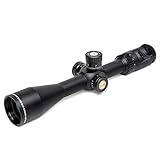
- 0.1 MIL Click Value, 18 MIL Total Adjustment, 10 yards to infinity Parallax adjustment
The Argos offers more magnification and an illuminated first focal plane reticle for less money. Glass quality runs slightly behind the Vortex, and the turrets feel less refined. For pure value, the Argos wins. For hunting-weight builds, the HST makes more sense.
Versus Leupold VX-5HD 3-15×44:
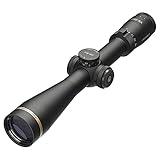
- Model #172368 – VX-5HD 3-15×44 Riflescope with an Illuminated FireDot Duplex Reticle, CDS-ZL2 and a Matte finish
Similar magnification range with better glass and illumination. The Leupold weighs less and offers superior low-light performance. However, it costs significantly more and lacks the HST’s tactical turrets. Choose based on hunting versus precision priorities.
Versus Nightforce SHV 4-14×50:

- NIGHTFORCE SCOPE – This SHV hunting gun scope incorporates a feature set built for versatility, starting with a 4-14x magnification range that offers an excellent combination of field of view and resolving power at higher magnification; The 50mm objective offers excellent light transmission at any time of day; The overall length is 14.8 in; Mounting length is 6.1 in; Optic weigh is 30 oz
Superior construction and tracking precision, but heavier and more expensive. The Nightforce excels for tactical applications but feels overbuilt for hunting. Glass quality is comparable, with Nightforce taking a slight edge.
Versus Vortex Diamondback Tactical 4-16×44:
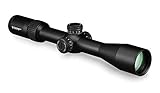
- The Diamondback Tactical First Focal Plane 4-16×44 stands at the intersection of precision and value, delivering an impressive array of features and performance.
The budget alternative from Vortex offers similar features for less money. Glass quality drops noticeably, and the turrets lack refinement. Fine for casual use, but the HST justifies its premium for serious applications.
Versus Vortex Razor HD LHT 4.5-22×50:
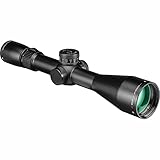
- The Razor HD LHT 4.5-22×50 FFP riflescope answers every demand of the long-range hunter, and is still among the lightest in its class while adding first focal plane functionality and a higher mag range.
Vortex’s premium hunting scope offers superior everything – at nearly triple the price. Unless you need absolute best performance, the HST provides 85% of the capability for 35% of the cost.
The HST occupies a sweet spot between budget and premium. It’s good enough for serious use without premium pricing. For hunters who shoot long range occasionally, it’s nearly ideal.
Practical Field Applications
Different hunting scenarios demand different scope capabilities. Here’s where the Viper HST excels:
Mountain Hunting: Weight matters when climbing thousands of vertical feet. While not ultralight, the HST’s durability justifies its weight. The magnification range handles everything from timber to alpine basins. Tracking reliability enables confident long-range shots when needed.
Prairie Hunting: Wind reading becomes critical on open ground. The VMR-1 reticle’s wind holds prove invaluable for quick corrections. Maximum magnification allows target evaluation at extended distances. The exposed turrets enable rapid elevation adjustments for varying ranges.
Whitetail Woods: Lower magnification provides adequate field of view for moving deer. Four-inch eye relief prevents scope cuts from lightweight rifles. Quick focus parallax adjustment helps with varying shot distances. The second focal plane reticle stays visible in dark timber.
Predator Calling: Fast-handling characteristics suit called-in coyotes. Variable magnification adapts from close encounters to cross-canyon shots. Reliable tracking handles multiple shots at different distances. Weatherproofing survives winter calling sessions.
Long-Range Practice: Exposed turrets and precise tracking enable steel ringing to 1,000 yards. The reticle provides reference points for wind calls and spotting misses. Sufficient magnification for most target identification. Repeatability builds confidence through high round counts.
Common Questions from Hunters
“Is 44mm enough objective for low light?”
The 44mm objective gathers sufficient light for legal shooting hours. You’ll lose about 10-15 minutes versus 50mm objectives in marginal light. For most hunting situations, 44mm balances light gathering with mounting height and weight. If you primarily hunt thick timber at dawn/dusk, consider larger objectives.
“How does it handle magnum recoil?”
I’ve tested the HST on rifles up to .300 Winchester Magnum without issues. The scope maintains zero and shows no internal damage after hundreds of magnum rounds. The robust construction handles any reasonable hunting cartridge. Eye relief prevents scope cuts even on lightweight magnums.
“Will the exposed turrets catch on brush?”
The low-profile turrets rarely snag during normal hunting. They’re tall enough to grasp easily but not so prominent they catch on everything. The locking feature prevents accidental adjustment. For exclusively timber hunting, capped turrets might suit better, but these work fine.
“Is the reticle too simple for long range?”
The VMR-1 reticle provides enough reference points for hunting distances without clutter. It’s not a Christmas tree tactical reticle, but offers holdover and wind references. For dedicated long-range shooting, more complex reticles help. For hunting, simpler proves better.
“How accurate is the parallax marking?”
Parallax markings get you close but require fine-tuning. At 100 yards, the marking is typically within 5 yards of actual. Don’t trust the numbers blindly – adjust until the reticle stops moving relative to the target. Individual eyes vary, making precise marking impossible.
“Does Vortex’s warranty really matter?”
Absolutely. I’ve used Vortex’s warranty twice on other products (user error both times). They repaired or replaced without questions or charges. The transferable, lifetime warranty adds value and peace of mind. It’s insurance you hope not to need but appreciate having.
Final Verdict
Plan for the worst, hope for the best, and choose equipment that bridges that gap reliably. After eighteen months and nearly 2,000 rounds, the Vortex Viper HST 4-16×44 has proven itself as serious equipment for hunters who occasionally stretch the distance.
This isn’t the ultimate long-range scope or the lightest hunting glass. Instead, it occupies that practical middle ground where capability meets affordability. The combination of reliable tracking, decent glass, and robust construction creates a scope that handles whatever Montana throws at it.
The lack of illumination remains my primary complaint. For a scope marketed toward tactical and hunting crossover use, illumination seems mandatory. The slightly soft turret clicks and edge distortion at maximum magnification are minor issues that don’t affect practical use.
For western hunters who need one scope for everything from timber elk to cross-canyon mule deer, the HST delivers. It’s precise enough for long-range steel, tough enough for backcountry packouts, and clear enough for trophy evaluation. Not perfect at anything, but good enough at everything.
Would I buy it again? Already have – there’s another one on my son’s rifle. At current street prices around $600, it represents solid value for serious use. You can spend less and get less, or spend more for diminishing returns. The HST hits that sweet spot where performance justifies price.
Remember, respect the game, respect the land, respect yourself. Good glass helps make ethical shots, and the Viper HST provides that capability without requiring a second mortgage. It’s equipment that works when the elk are bugling, the wind is howling, and the shot of a lifetime presents itself.
The wilderness doesn’t care about your brand preferences or budget constraints. It only cares whether your equipment works when tested. The Vortex Viper HST 4-16×44 passes that test consistently, earning its place on rifles that see honest use in tough country.
Looking for more field-tested optics that balance performance and value? Explore our comprehensive scope reviews and proven gear recommendations at Moosir.com. Because the best equipment isn’t always the most expensive – it’s what works when the mountains get steep and the shots count.